

For this edition of Publishing Strategies I thought it would be interesting to hear from another audience growth expert on how they are tackling the various digital challenges we are all facing today.
I first worked with Duncan in 2011 when he ran the Sports and News desk at MSN UK and I ran Entertainment. Digital seemed a simpler world then - both search and social were very much ‘new kids on the block’ in the newsroom and AI was not even a glimmer in anyone’s eye. Since leaving MSN, Duncan has been across a number of international projects including EuroNews and CGTN Europe and I thought it would be great to quiz him on his current content strategy for Global South World.
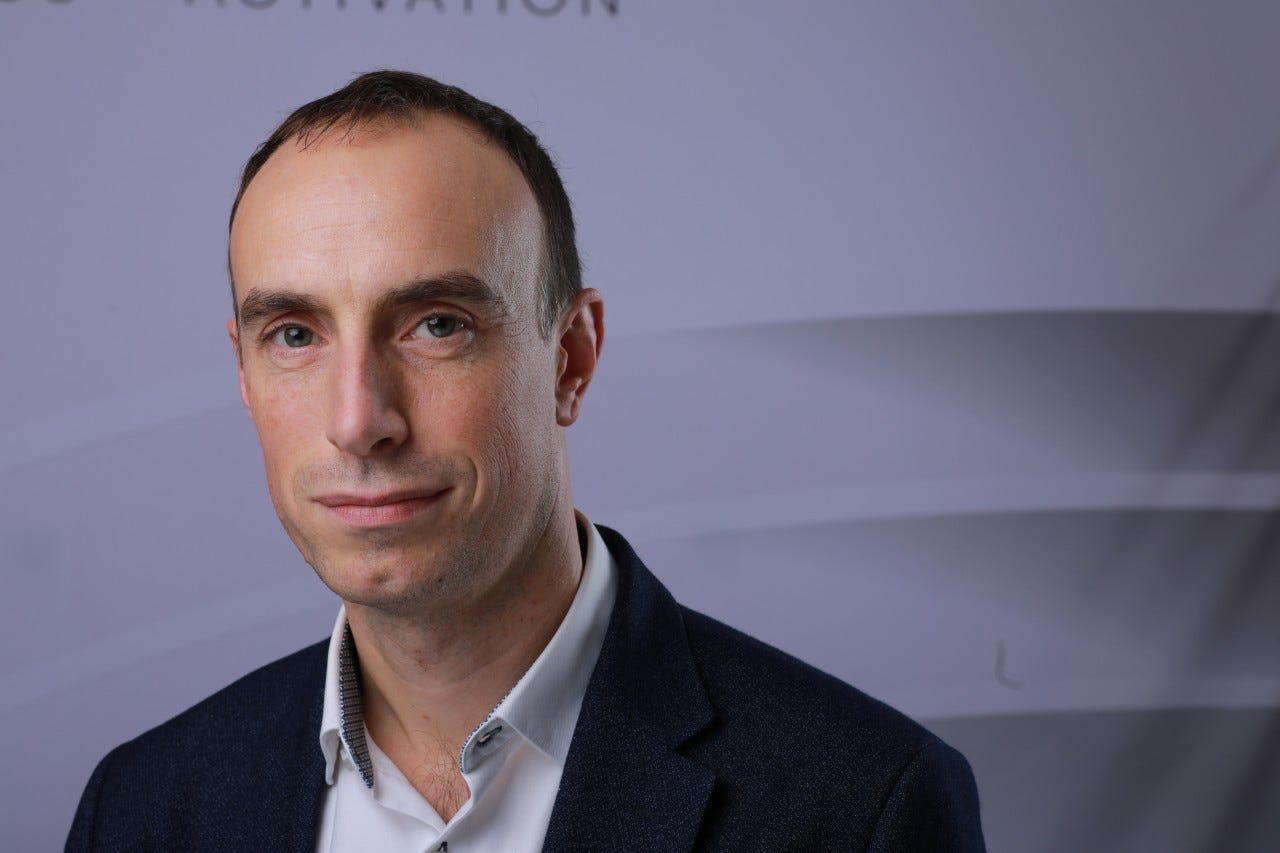
Hi Duncan, let’s kick things off, how did you get into journalism?
I always wanted to be a journalist. But when I left university I was lured into working at an investment bank by money. I really hated it. But while I was there I noticed the Bloomberg terminals and so among hundreds of letters to newspapers and TV channels that all got ignored I sent one to Bloomberg who took me on in the bottom role of the newsroom.
Tell us about your current role
I run the media brands for Impactum, which includes several social-first media like The World in Maps and World Visualised but also the news publisher Global South World.
Tell us a bit about the team behind Global South World. Who are they? How do you manage the workflow of an international team?
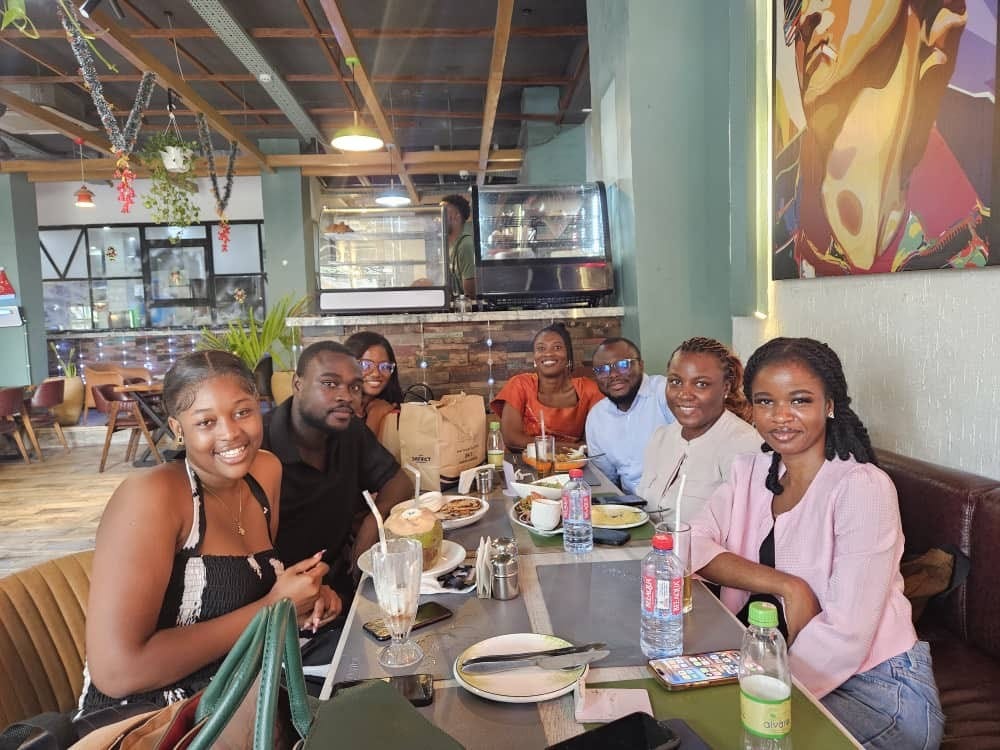
Because of our positioning, it was really important to recruit our teams in Global Majority countries. There are some really brilliant journalists around the world, fortunately many English-speaking, and they often don’t get the same opportunities as journalists in Europe or the US. So they are highly motivated to work for an international brand. Our main team is run by Ismail Akwei in Accra, Ghana but we also have editors in Manila, Philippines and La Paz, Bolivia.
What are the main objectives of your editorial content strategy? What is your perspective on the world? What is unique about your proposition?
Our goal is to address the information inequality which has built up as the world transformed over the past decade. Working in executive roles in different media businesses during this time, I saw first hand that the disruption in the industry caused by technology developments and changes in audience behaviour absorbed the huge bulk of senior management attention. So much thought was going into business models and analysing existing audience behaviour but not much attention was directed into the transformation of global geopolitics. Cost pressures led to scaling back of foreign coverage so there wasn’t an impetus to reconsider where news was being made globally.
Our view is that countries like Brazil, Indonesia, Nigeria, South Africa - nevermind India and China - are no longer second order powers and have not been for some time. They have thriving and innovative business landscapes, make huge contributions to global trade and have populations who are educated, motivated and ready to take leading roles in how the world is shaped. But all we hear about in the international media is war, natural disasters and perhaps an election now and then. So we try to tell some of the positive stories, and capture some of the social trends.
What do you think western media can learn from brands like Global South World?
Firstly, I think it’s about responding to change. The transformation that so many countries have gone through in the last 10 years is just dramatic. Certainly it’s uneven, but for so many people opportunities have opened up and aspirations have developed. Of course you cannot paint most of the world with one brush, but there certainly is an excitement and positivity which we as a media are trying to capture.
The other thing which I hope to talk about more later is the role of social media. Because the cultures are so mobile first in many of the countries we serve and because bandwidth has always been expensive, there isn’t a great deal of web browsing. All the action is on social media. This isn’t so different to sections of the population in Europe, but there aren’t many media which have really embraced it.
Who are your main competitors?
Obviously, there are other English language organisations which have similar target audiences to us. But frankly those audiences are so large and so underserved that I don’t spend to much time thinking about how we can compete with them. The competition that concerns me is the brainrot content, because our viewers are on social media. So they are seeing what is in their feed. Our challenge as informational media is to make what we do accessible enough that we can capture attention there. And it has to be said, unfortunately that we don’t get much help from the platforms which disadvantage news publishers heavily. And a special shout out to TikTok here, because it has the potential to be a huge force for good in educating the world, but does a number of significant and unnecessary things which undermine its ability to take that opportunity.
 Tiktok failed to load.
Enable 3rd party cookies or use another browser
What are your key challenges at the moment?
When we launched we wanted to base our operations around a website. Because we were concerned that we wanted to be able to choose what our audience saw first and not have it dictated by social media algorithms. But we found ourselves very much in a world of zero Google. As a new brand we did all the technical bits right, but we found ourselves almost invisible in search. Now one reason for that is, I believe, that Google is very cautious about new news sites. As we were founded in the era of generative AI, it’s so easy to spin up a website that looks like a news site and so I understand why the bar for driving traffic has become so high. The other reason which I alluded to already is that many of our audience don’t use search. They get their information from social media. So we have moved to a social-first publishing pattern while also working with partners such as Africa.com and GlobalVoices.org as well, of course, MSN to distribute our written content more widely.
What are your key audience growth tactics?
Short, vertical video are what our audiences want. Even on our website you will find most of our video content is vertical and has always been. Breaking news still works and we have had some considerable successes around social lives.
But what is really interesting is collaborations, these are genuinely win-wins and have been enormously successful for our sister channel @TheWorldIn\Maps. As I mentioned, I don’t really see other media as rivals but potential partners. One project we have recently launched has been Global South Voices. Last year we did a lot of research to identify the most influential news creators on social media for a series of powerlists. We then tapped that work to build a list who we can regularly collaborate with. Together the network has millions of followers and reach of hundreds of millions but often the audiences were restricted to one country and what Global South World is able to do it take it international. In return we get to learn from how creators are able to engage their audiences so successfully.
What is the mix of original verses syndicated content at Global South World?
When we started off we felt it was important to cover the major news from around the world but we knew we couldn’t do that credibly ourselves and it wouldn’t have served any purpose. We do use AI to help us spotlight summaries of news from countries which rarely find themselves on the radar. But we also took a feed from Reuters, to cover off the big stories. Over time, we have established that is not what our audience are looking for, or perhaps there are other places where they can get it, so from next month we will be 100% original content about the Global South.
Are you currently using AI in your newsrooms?
Yes, in a few different ways:
1) Newsgathering - we use it to build summaries linking out to stories from news outlets in some of the many countries we cover
2) Back-end optimisation - we use Gjirafa’s Codex CMS which recommends tags and suggests headlines and social post texts based on our stories. Of course there are spelling checks too.
3) Personalised recirculation
4) Content creation. This the tricky one because we are cautious about how audiences and platforms respond, We do have a sister site, Qonversations where we do a lot of experimentation around using AI to build videos where we don’t have images or footage available. We’ve also done some work on Global South World using Avatars to present stories because we can get around issues of local accents or having to select journalists by whether they look good on camera. But these have not performed particularly well, there does seem to be an element of distrust. We use AI for translations and dubbing, which works really well, and to create articles based on our video which saves a lot of time although of course it is all managed by a journalist.
How are you responding to AI chatbot summaries?
We didn’t have much search traffic to lose. So basically we do try to maintain SEO optimisation, but we haven’t invested much energy into this. Social media is where our audiences are.
What are you most focused on in the year ahead?
We’ve been in a steady growth phase for the past two years, but with a close eye on costs. We are looking to cement revenue streams that can cover our running costs, probably mainly through licensing and some branded content production in order to be able to reinvest in growing our teams and output. We’ll continue to experiment with different uses of AI, especially around video.
Finally, what advice would you give to anyone thinking of getting into journalism!
It’s a career which has given me a lot. I think I can say I’ve never been bored at work, which I don’t take for granted. But there are sacrifices to be made, especially if you work in news around the weekends and evenings. Increasingly the role of a journalist has developed around the ability to learn and manage new tools. When I started, it was basically a word processor, yellow pages (OK online yellow pages) and a telephone. And it had been like that for decades. Now you do need to be comfortable adapting to use new tools as they are introduced. So expect to be challenged, out-of-your depth and uncomfortable. On the flip side, know that journalism still changes the world and always will.
Practically, set up a blog, podcast or social channel about something you love. You need to show you already do the job as entry level jobs hardly exist any more.
If you are a publisher and have interesting perspective on digital audience growth, let’s talk! Contact me at me@stevenwilsonbeales.com.
Related articles