

Admit it. It’s been a bit of a Google-heavy week. First, their May Core update was finally completed so that’s always a joyous time - digging into the data to work out if a) your website absolutely tanked during that period, and b) if that was actually caused by Google or some overzealous devs or maybe just the unbearable HEATWAVE we just had in the UK.
You can always count on climate change to mess up the data. Thanks, greenhouse gases. Duh.
But there have been other things going on with Google that have made me wince the same way you might do when you hear your drunk Uncle at a party. I mean it started off ok. I quite liked their note on ‘Optimising your website for degenerative AI Features on Google Search.’ It’s all pretty standard stuff, but I think it’s important when a big org like Google comes out backing core optimisation principles and flagging certain practices that might get you in trouble further down the line.
(Eli Schwartz gave a great podcast interview talking further about this which I recommend for anyone who wants to go deeper.)
Then Google announced ‘New ways to find your favourite sources and original content in AI Search’ - and that’s when the wheels began to wobble. Sure, any tool that is going to lead to more publisher visibility is to be welcomed, but it all feels like begging for crumbs after the impact of AI Overviews.
And then we got the announcement of two new features in Google Search Console: one which will allow you to control whether your website appears in generative AI search features and the other which is a new performance report showing generative AI features across Search and Discover.
And that’s when the wheels came off. Again, these are all nice features to have but I think their practical use is limited. Firstly, the control is an ‘opt-out’ feature meaning a certain level of resource is needed to manage this and, well, I’m just not convinced about the value of opting out in the first place. The rationale here is that publishers wanted a way to protect their content from AI summaries so that users would click through to the actual content. But what we have here instead is a situation where NO ONE is going to opt out simply because someone else will only fill their place.
The only way this functionality could ever be effective is if the whole publishing community bonded together to opt out of certain topics. And even then, that sounds like a perfect opportunity for some tech bro to spin up a site à la Lovable. The misinformation risks are HUGE.
Then we get to the actual performance dashboard and…well…it’s all a bit ‘meh’ right? We get some impressions data but no clicks. WHY GOOGLE, WHY? ¯\_(ツ)_/¯ Doesn’t mean I won’t be using it though - it’s just that’s it’s all getting a bit ‘The Hand that Feeds’ around here.
Side Note: Did you know I read one of the best explainers on the the difference between Parametric Memory and Retrieval (RAG) this week from Stephen Burns at Common Crawl? Go ahead and read it.
Top Insights from World News Media Congress
I wasn’t there in person but I was certainly there in spirit as I popped open another bottle of Château Miraval and read Ezra Eeman’s keynote on AI & News Media. The message is clear - if you’re not looking at how AI is already changing audience expectations about how they want to consume their media, then you need to have a long hard look in the mirror. Essential reading - as was New York Times publisher A. G. Sulzberger’’s speech on why (and how) news publishers should fight AI platforms.
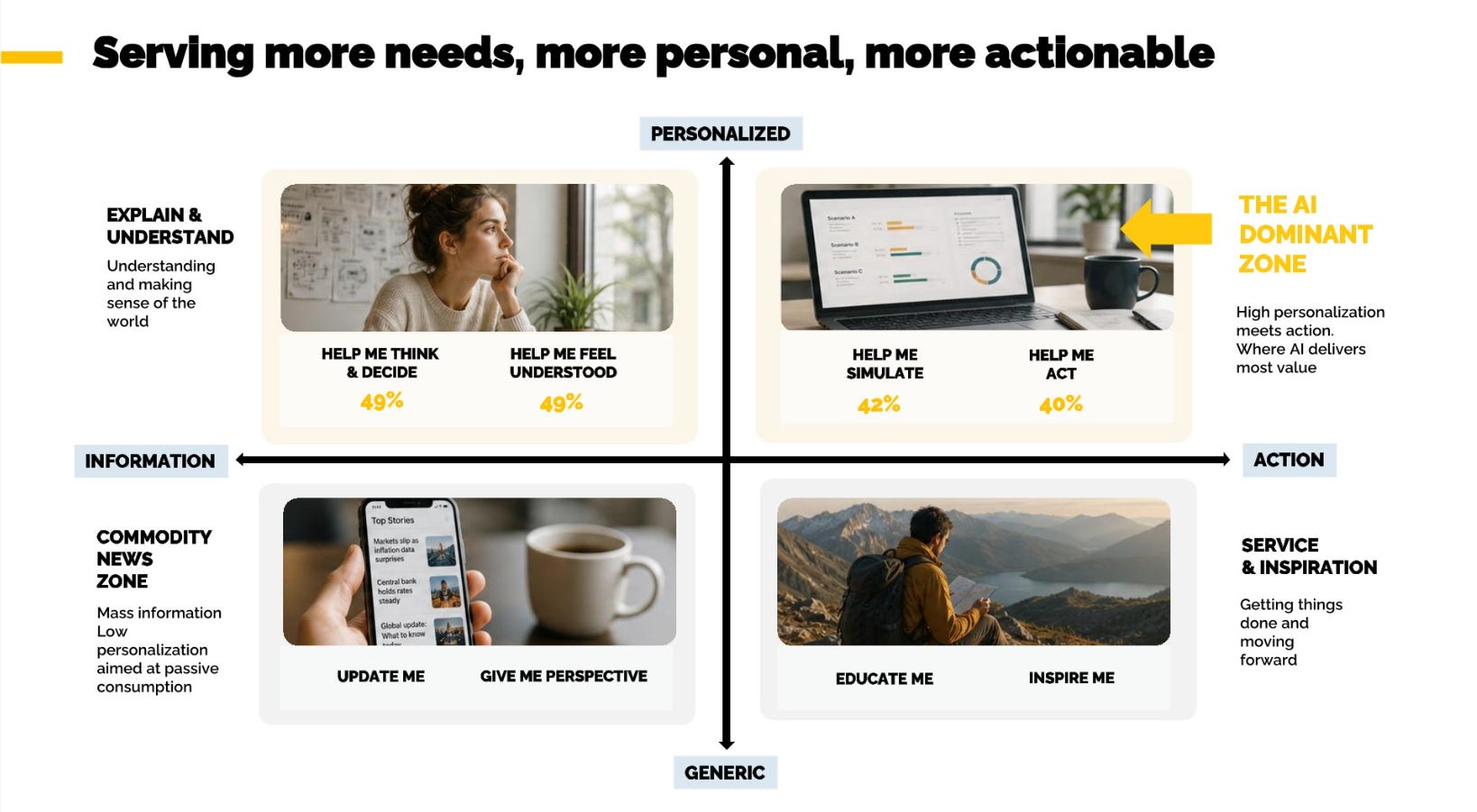
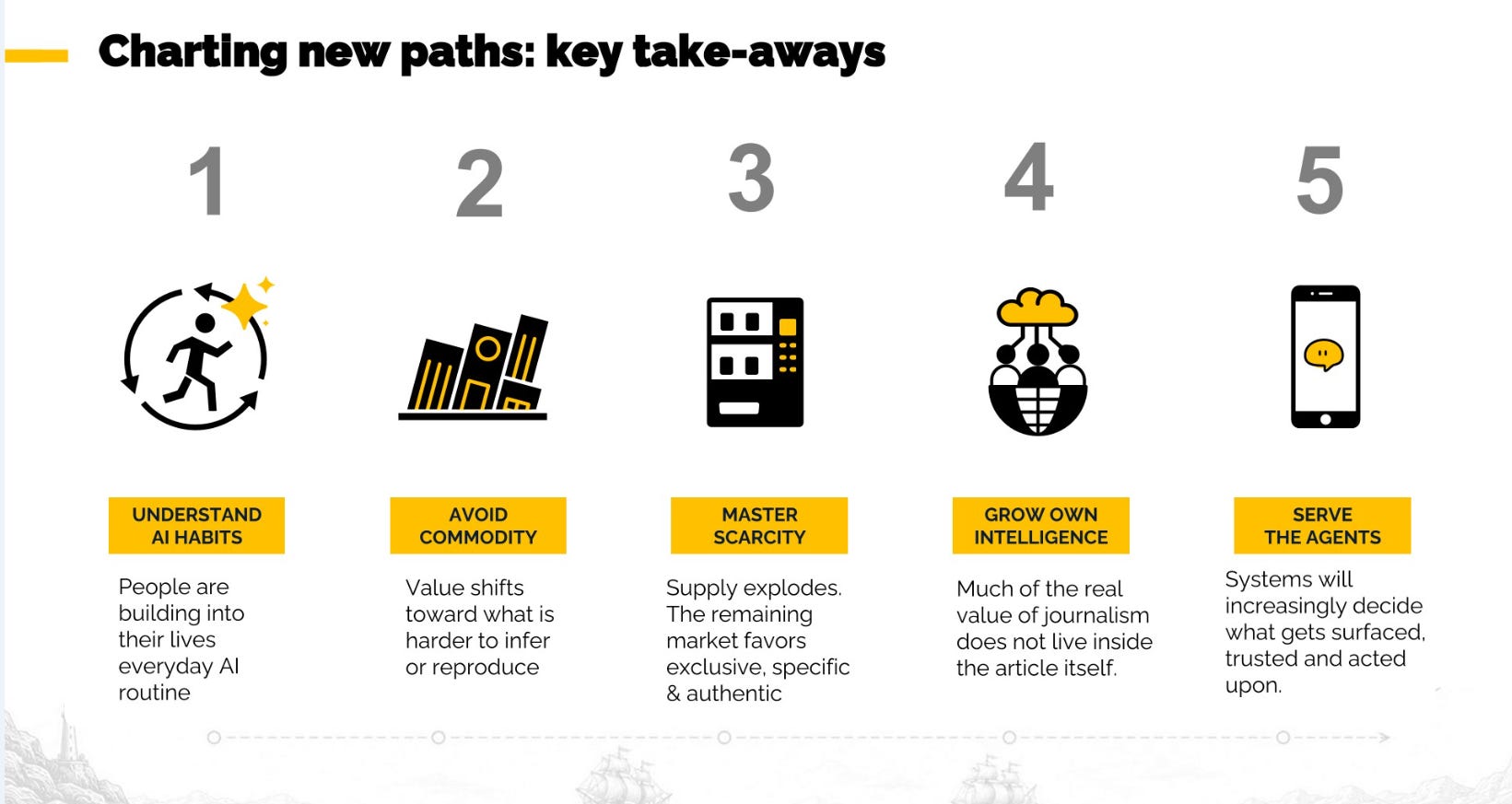
Released also this week was the FT Strategies and WAN-IRFA ‘collab’ in the form of their ‘Future Newsrooms’ study. There are so many great insights in this report that I could share, so I really recommend you read it. Here’s just a few of the many that caught my eye.
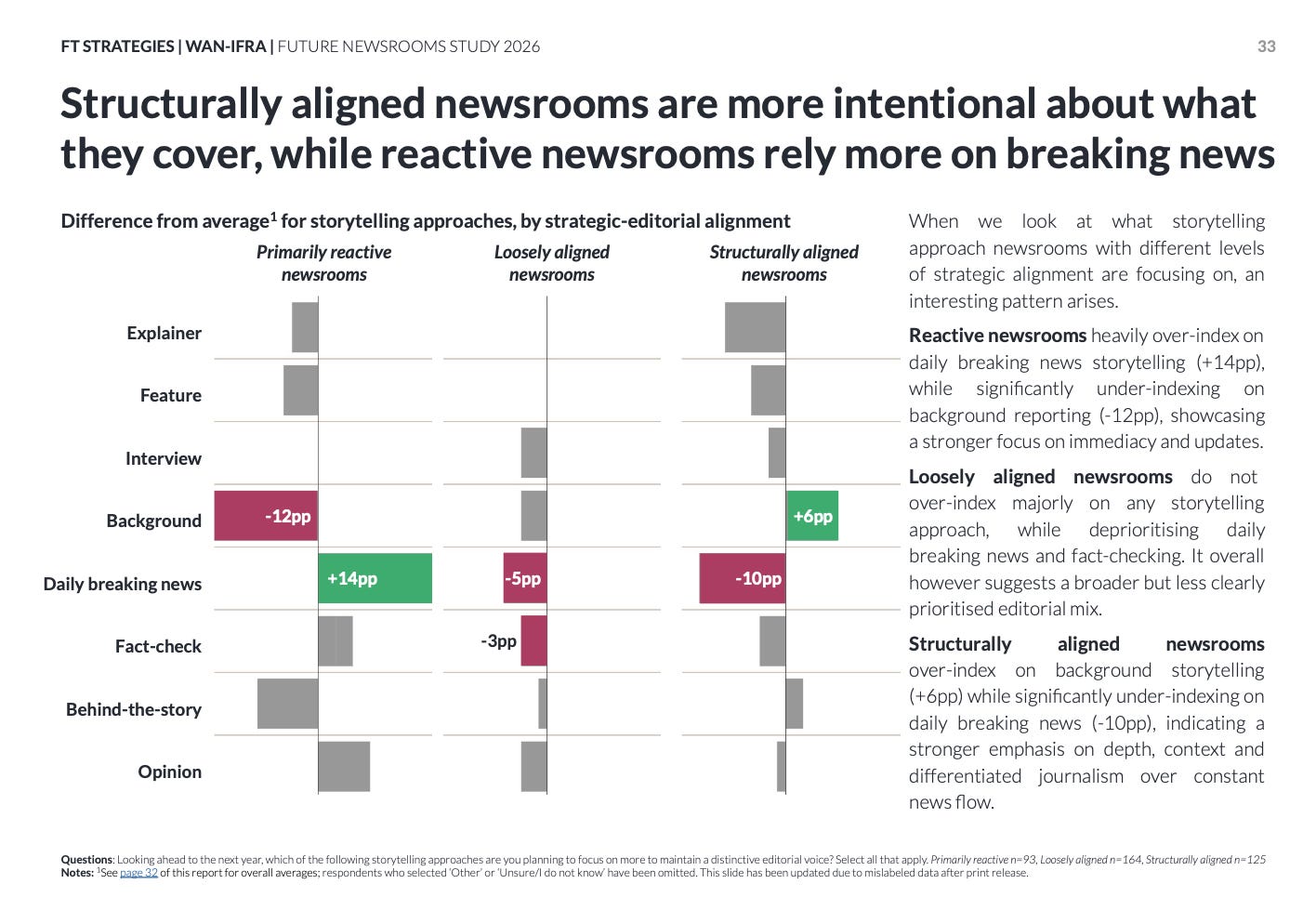
There’s probably no surprises in this one, but the report does build a powerful argument for the ‘structurally aligned newsroom’ - and that, I can tell you, isn’t about delivering three thousand updates on Love Island.
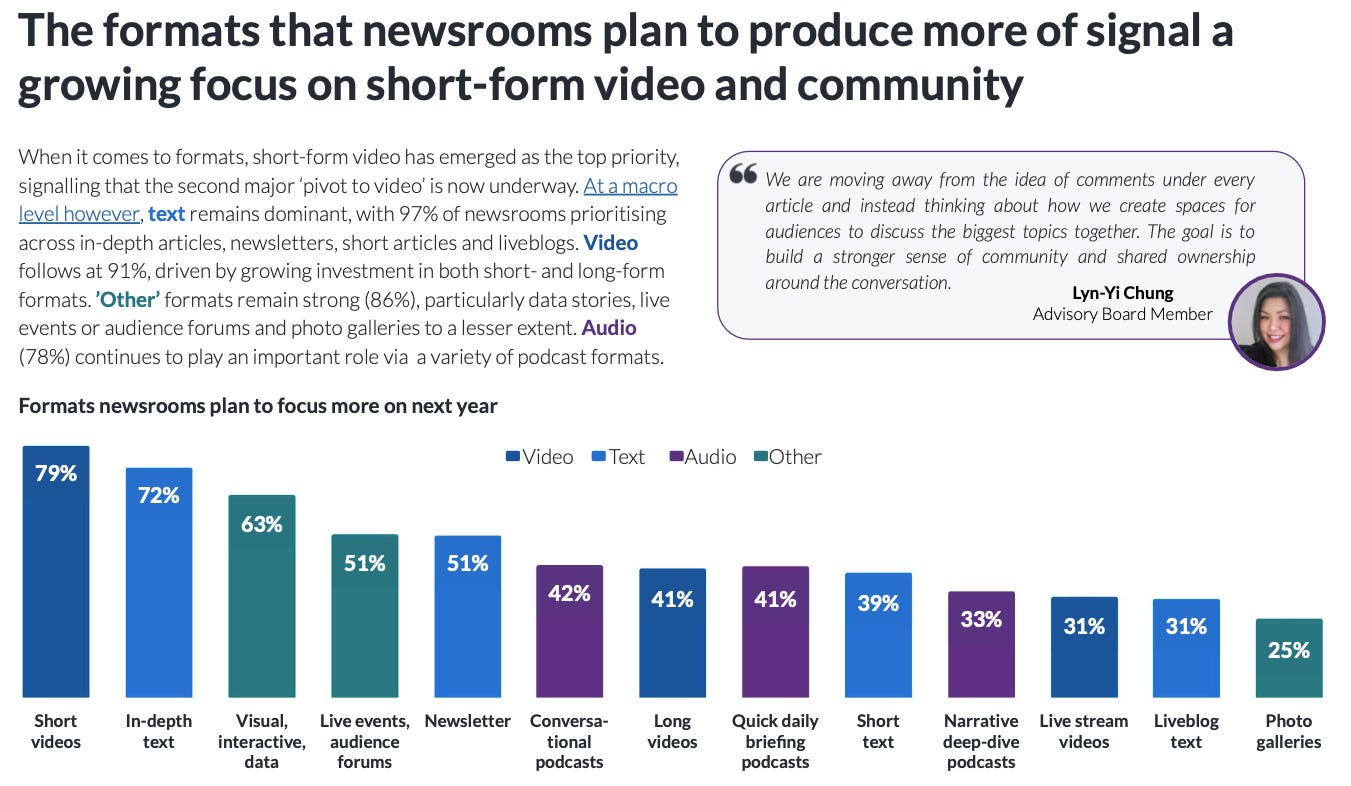
It’s always interesting to see what formats 448 senior publishing leaders are currently focusing on. And even more interesting to see that it’s still text. I’m not sure if that’s worth celebrating or crying over.
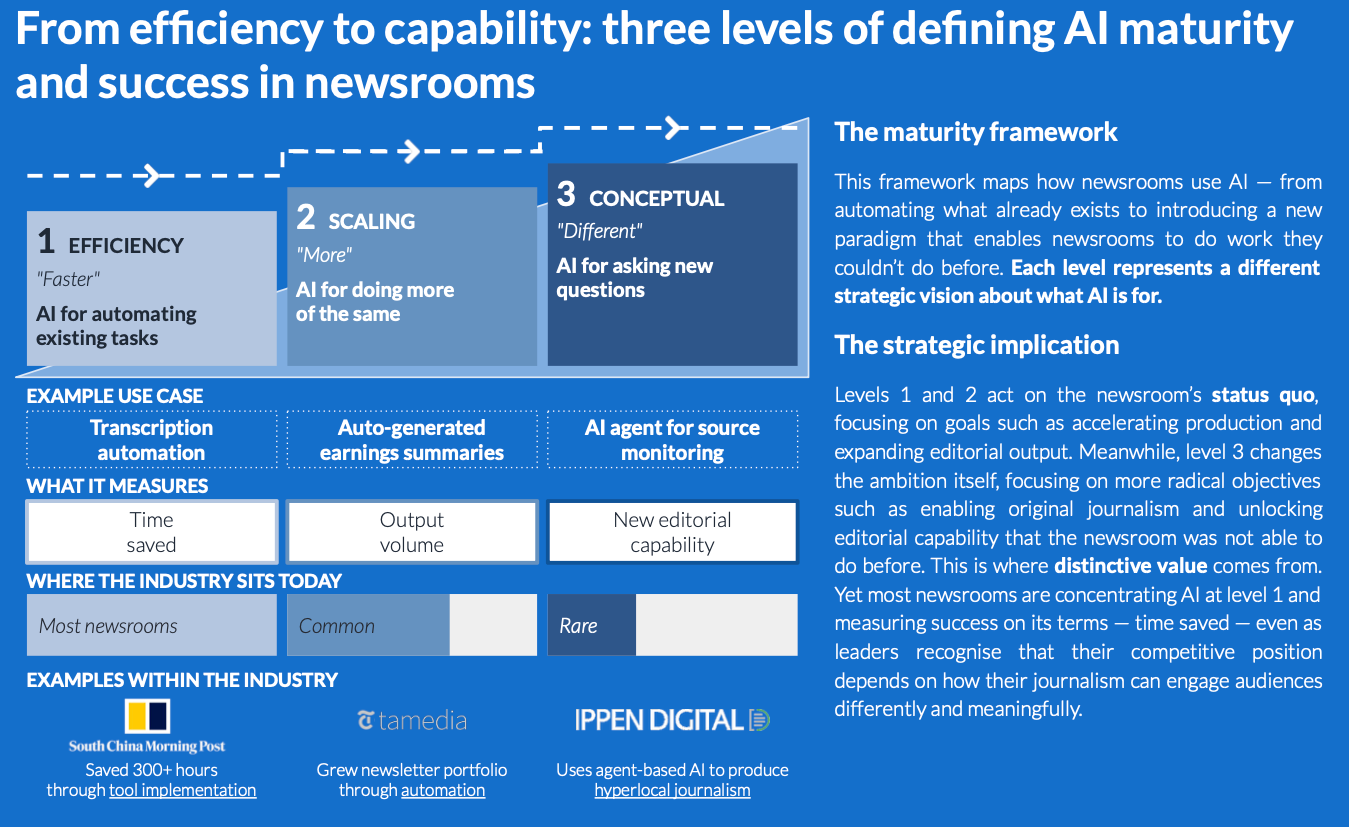
In summary, the report makes for grim reading in some areas: a lot of decisions made in newsrooms are not data-driven, staff lack strategic direction, and training in AI is pretty low. But I did like how the report highlighted how newsrooms can adapt to meet their audience in the places and formats that suit their audience whilst still delivering quality journalism.
And to that, I will raise my glass.
Come and join us at Glide Live in London on June 17th! All the details here.
Related articles
The impressions-without-clicks problem you're describing for publishers is hitting ecommerce product pages in exactly the same way — we're seeing retailers get significant AI Mode impressions in the new GSC report for product-specific queries, but the click-through data is either absent or shows steep declines compared to traditional Shopping results. The opt-out dilemma is even sharper for retailers: pulling your product listings from AI features means handing that consideration phase to a competitor whose Merchant Center feed is better structured. The real leverage isn't in the opt-out — it's in feed completeness and schema quality, which remain the best signals Google has for deciding which products to surface in AI-generated responses.