

I’ve now been to about thirteen Newsrewired events in London, and they’ve always been a great place to find out how newsrooms are responding to the biggest challenges of the day. It ‘s always had an operational focus with practical tips that you can take back to the office to impress your boss. Kudos to Marcela, Jacob and Ophelia for putting on another great event, this time located on the 17th floor of the News UK office with a really lovely panoramic view of the city.
The key theme this year was experimentation with a real focus on practical application - be it via TikTok, Claude Co-Worker or Reddit. I’m going to list some of the highlights below but please check out Journalism UK’s live blog for more details.
So in no particular order.
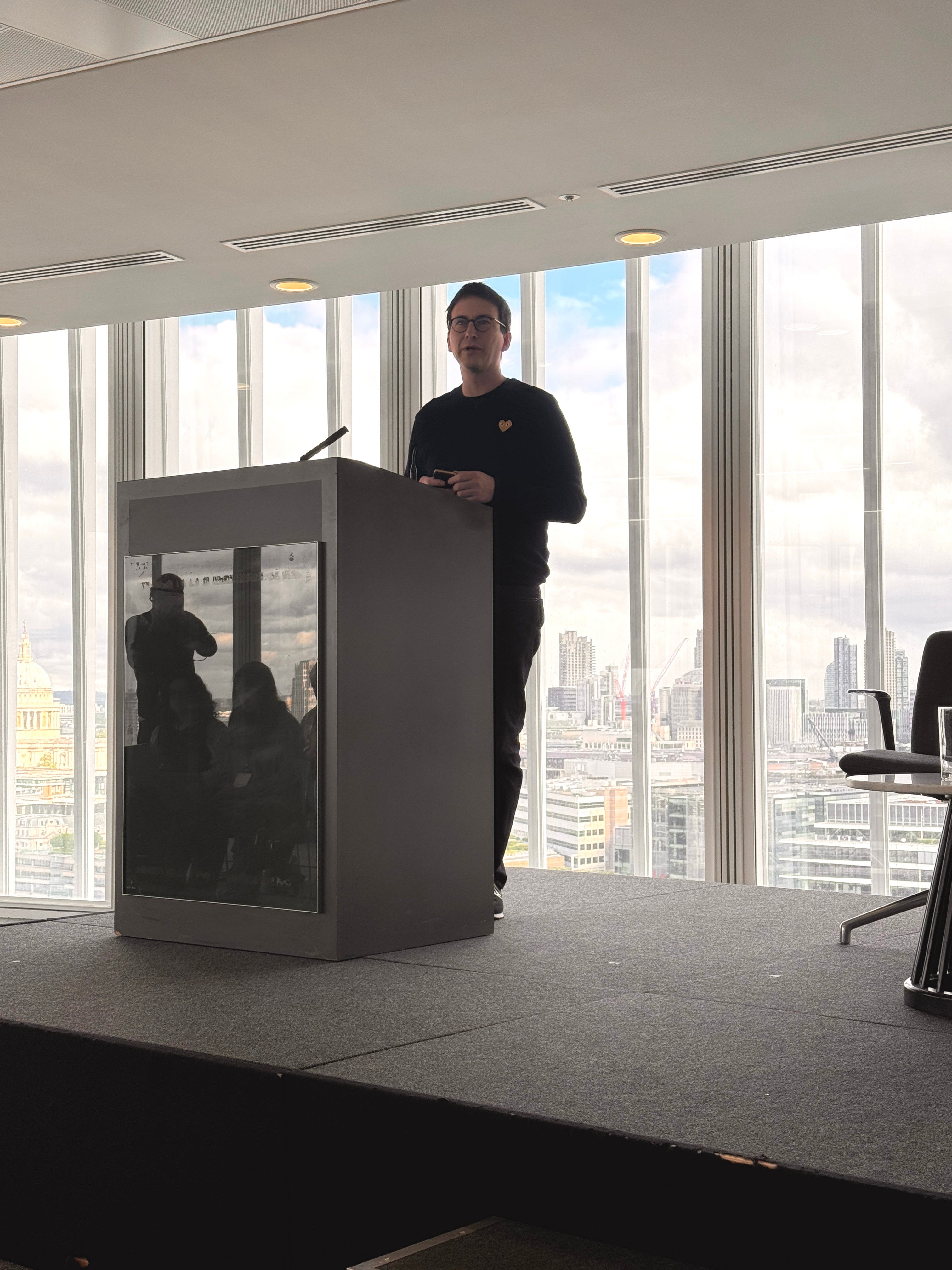
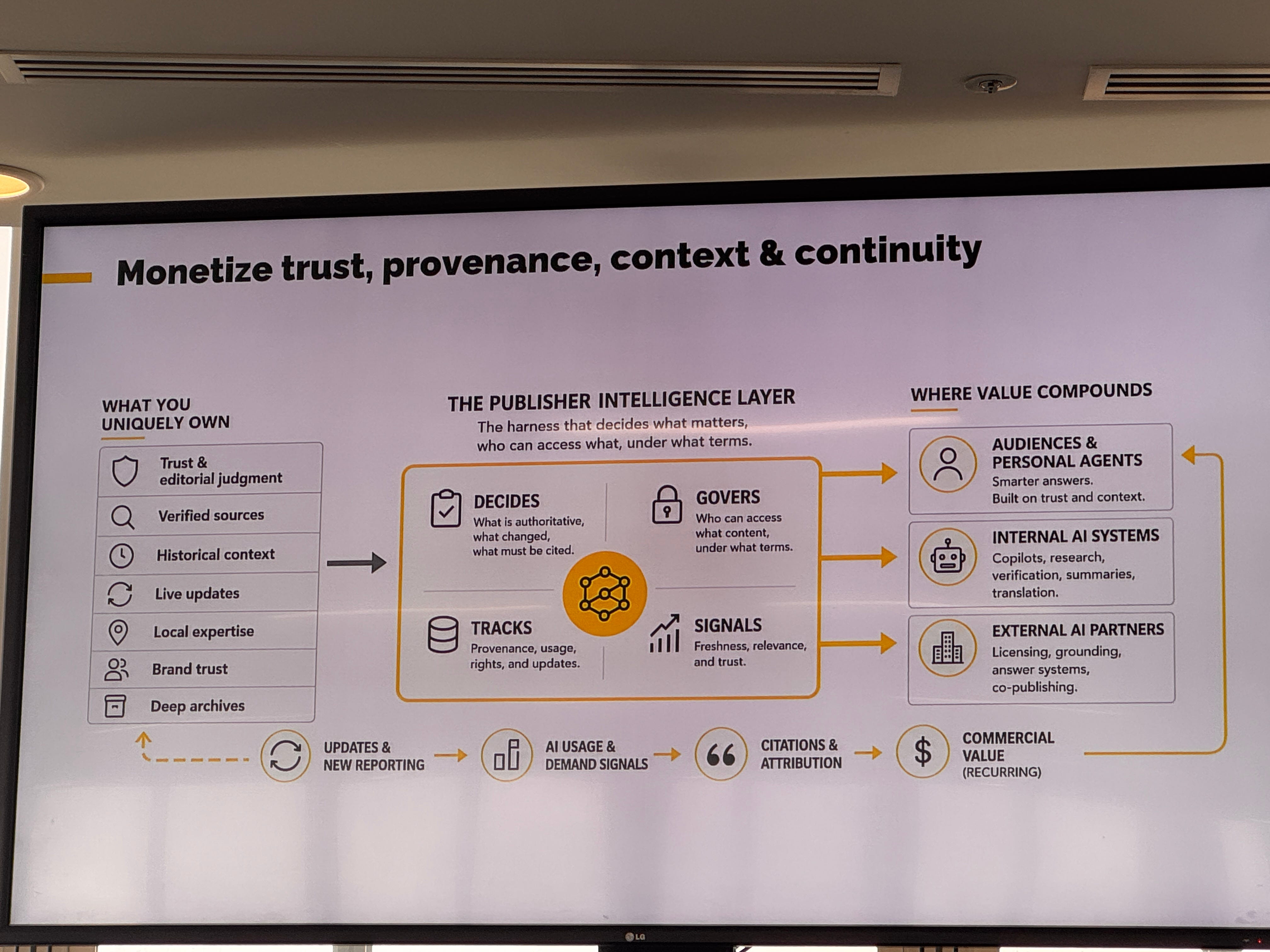
We had a great ‘state of the nation’ keynote from Ezra Eeman (Strategy & Innovation Director at NPO) who brought us up to date with the impact of AI on newsrooms and what to expect in the future. He referenced Good Tape created by journalists at Zetland, Semafor’s vibe-coded charts and WSJ’s Story Maker tool as all examples of how newsrooms are innovating through the use of AI. He also spoke about how agentic AI will improve our current workflows and surface content faster to us via apps like Huxe. But if this means less audience going to publisher owned-domains then how can we adapt? Cue liquid content and the News Atom project from Sannuta Raghu - which is amusing because we used to call this approach ‘adaptive content strategy’ - but a great read nonetheless. The NLWEB protocol was also referenced, possibly helping publishers on their path to API ‘nirvana’.
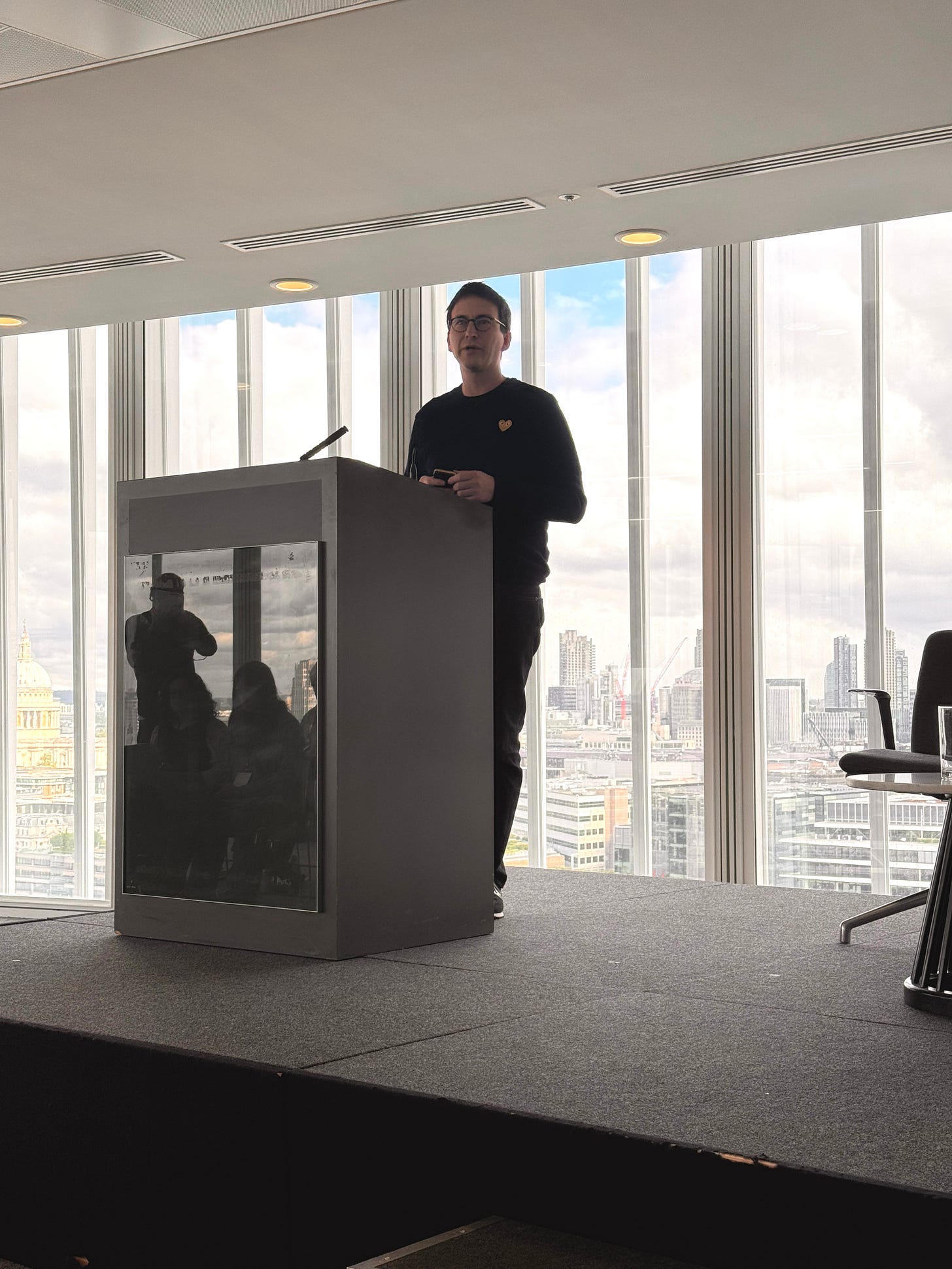
Ezra Eeman (Strategy & Innovation Director at NPO). 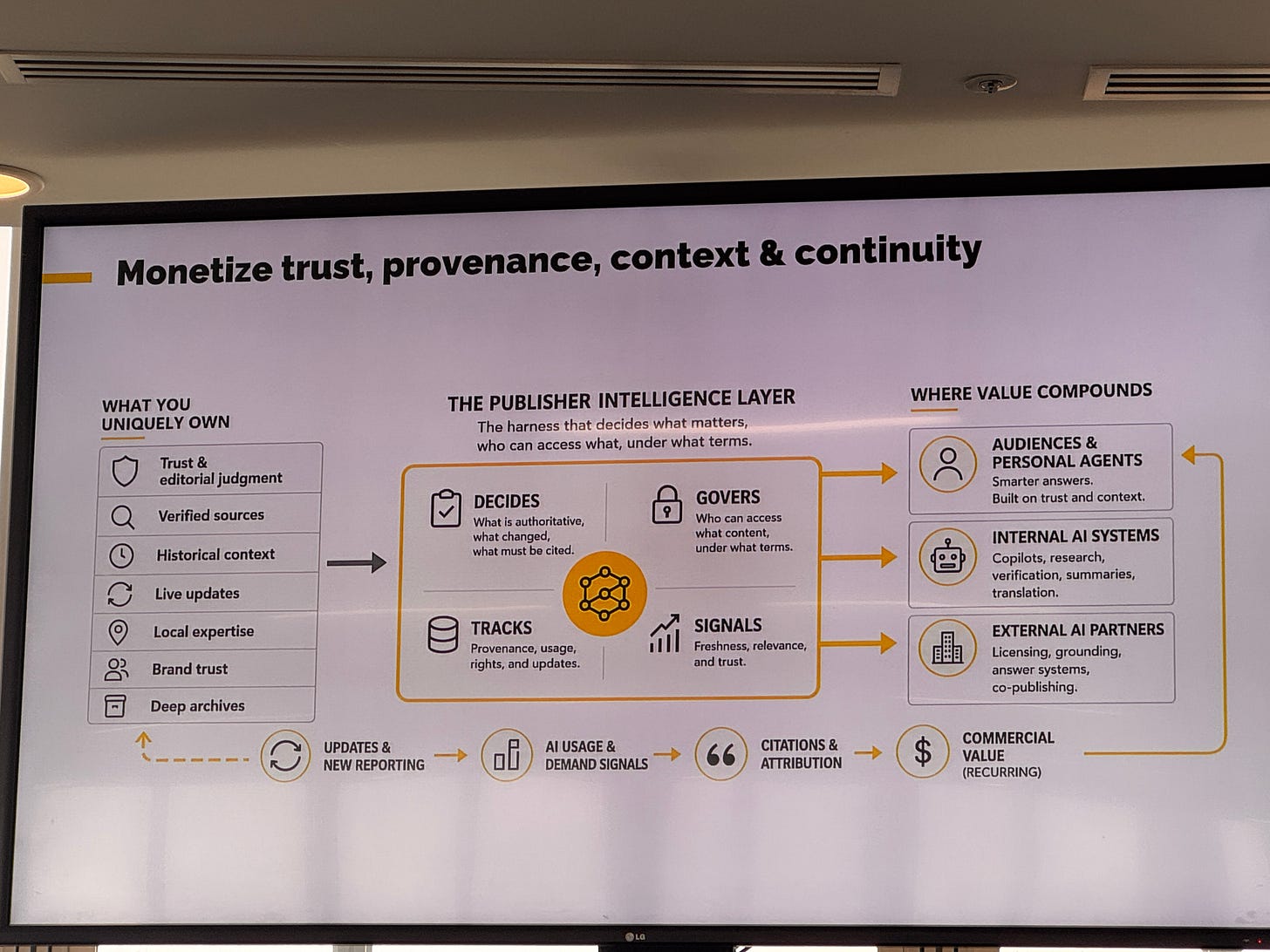
How publishers can tackle the new landscape via Ezra Eeman. We had a great debate about the merits of creator journalism from Kassy Cho, Alessandro Accorsi and Valeriia Voshchevska. Some publishers might be reluctant to engage with creators because they feel that they may not be impartial. But as the panel pointed out, with so many ‘crisis chasers’ out there capitalising on the latest trends and spreading misinformation - newsrooms need to engage with creators to fight back. Newsrooms can no longer be so impartial that they remain invisible in the feeds, they need to captivate an audience with personality, tone and opinion, as well as a commitment to values. The way to do this isn’t by hitting people with explainers, it’s about also being in that same viral moment as their audience and only dropping contextual insights once the audience has warmed up to your brand.
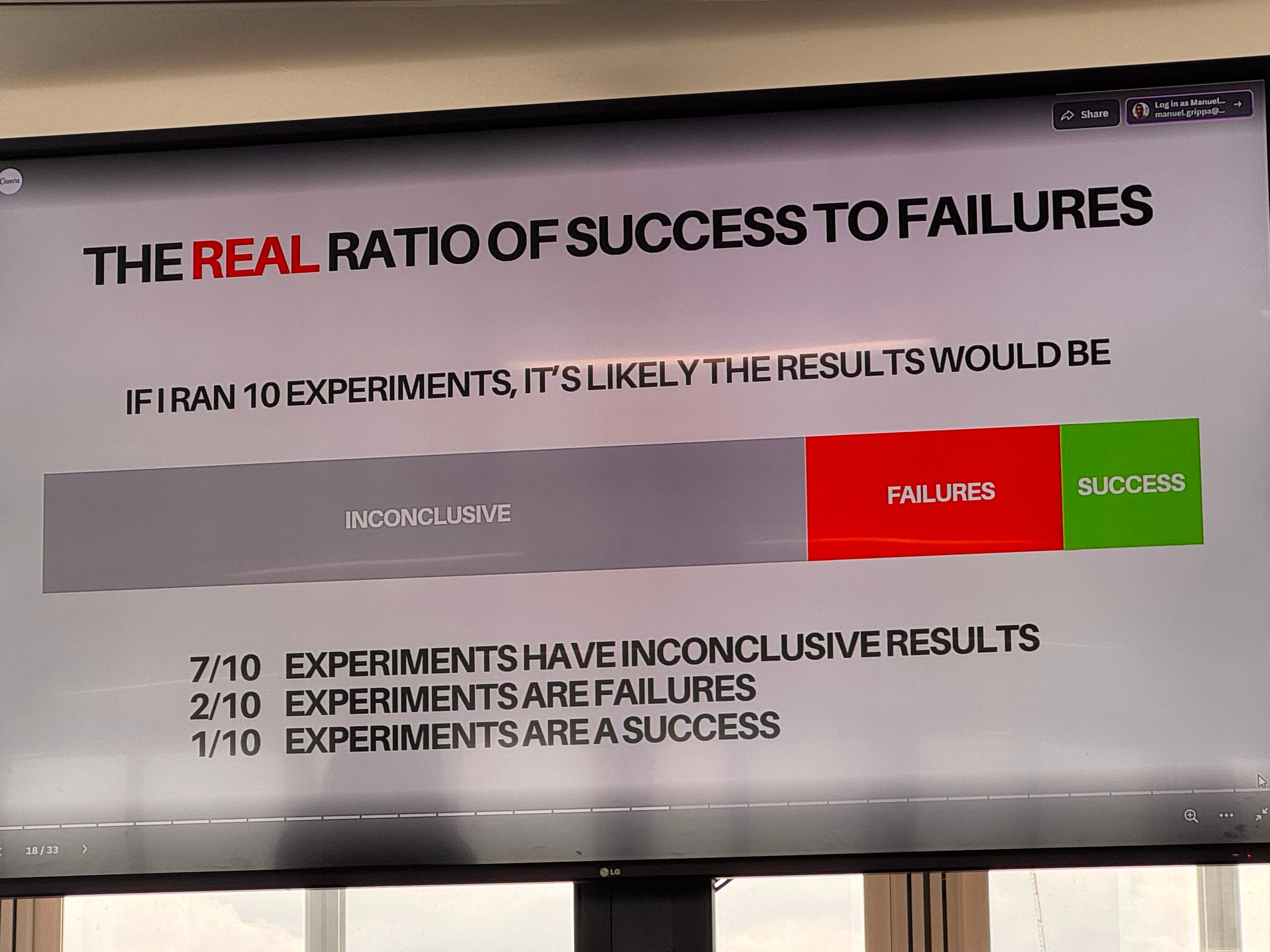
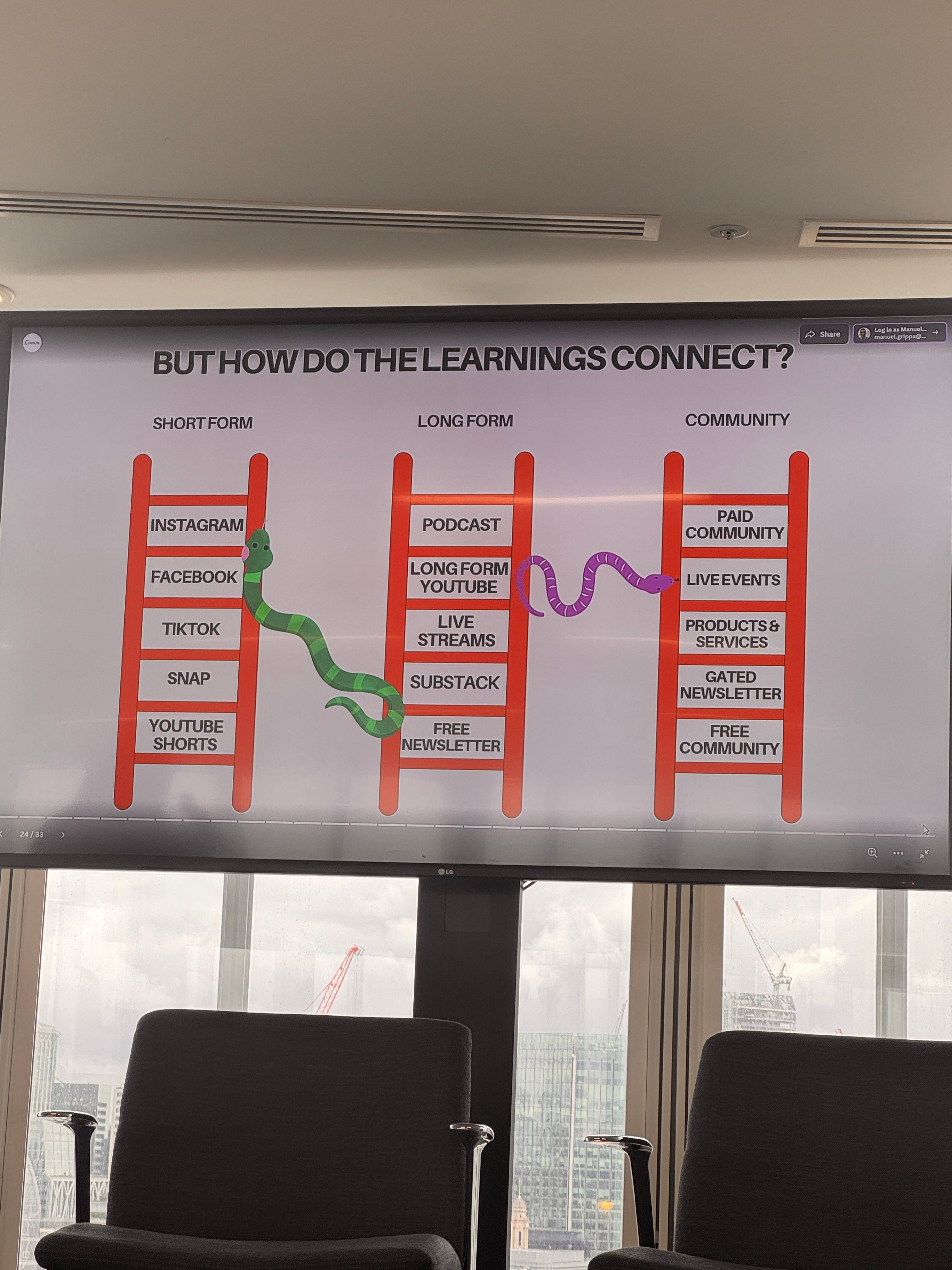
Continuing the theme of experimentation and innovation, Grace Miller from Flight Story gave us a great insight into how their company (who produce the second biggest podcast in the world - Diary of a CEO) approach innovation. Their approach to their podcasts, as well as experimentation is to try and maintain that curiosity we all have as children in everything they do. They take an MVP approach to experimentation, accepting that 70% of their experiments are probably going to be inconclusive, 20% will fail, but 10% will be successful. I thought that was a great attitude - acknowledging acceptable mistakes. They tend to only test with one variable at a time - e.g. one A/B test of a thumbnail - because if you have two many successful variables, which ones do you actually pick? They also experiment with paid media and synthetic audiences across their team of 120 staff. It was a great presentation and I think we’re going to hear a lot more Grace and the successes they are having over at Flight Story.
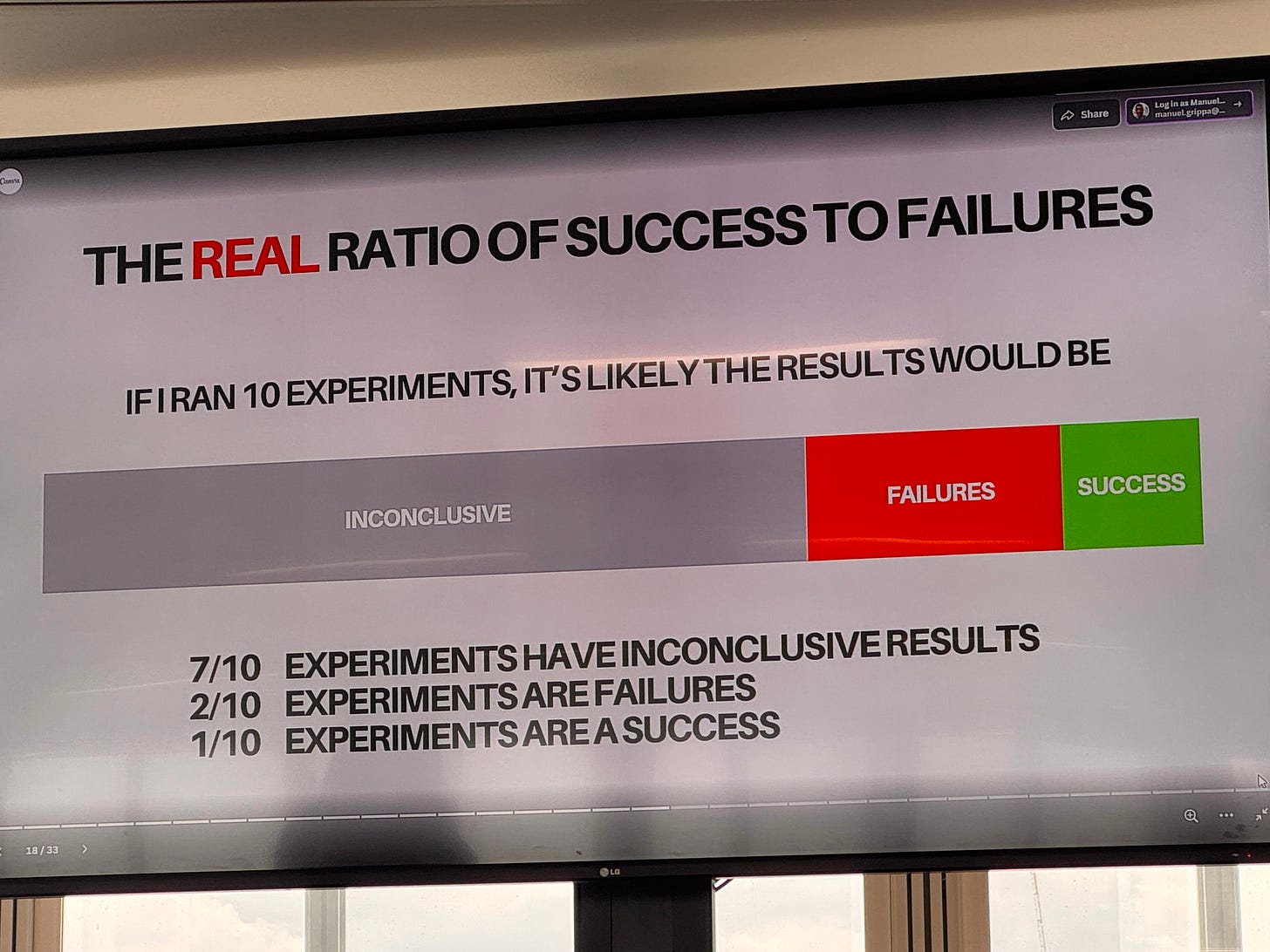
I loved this slide. 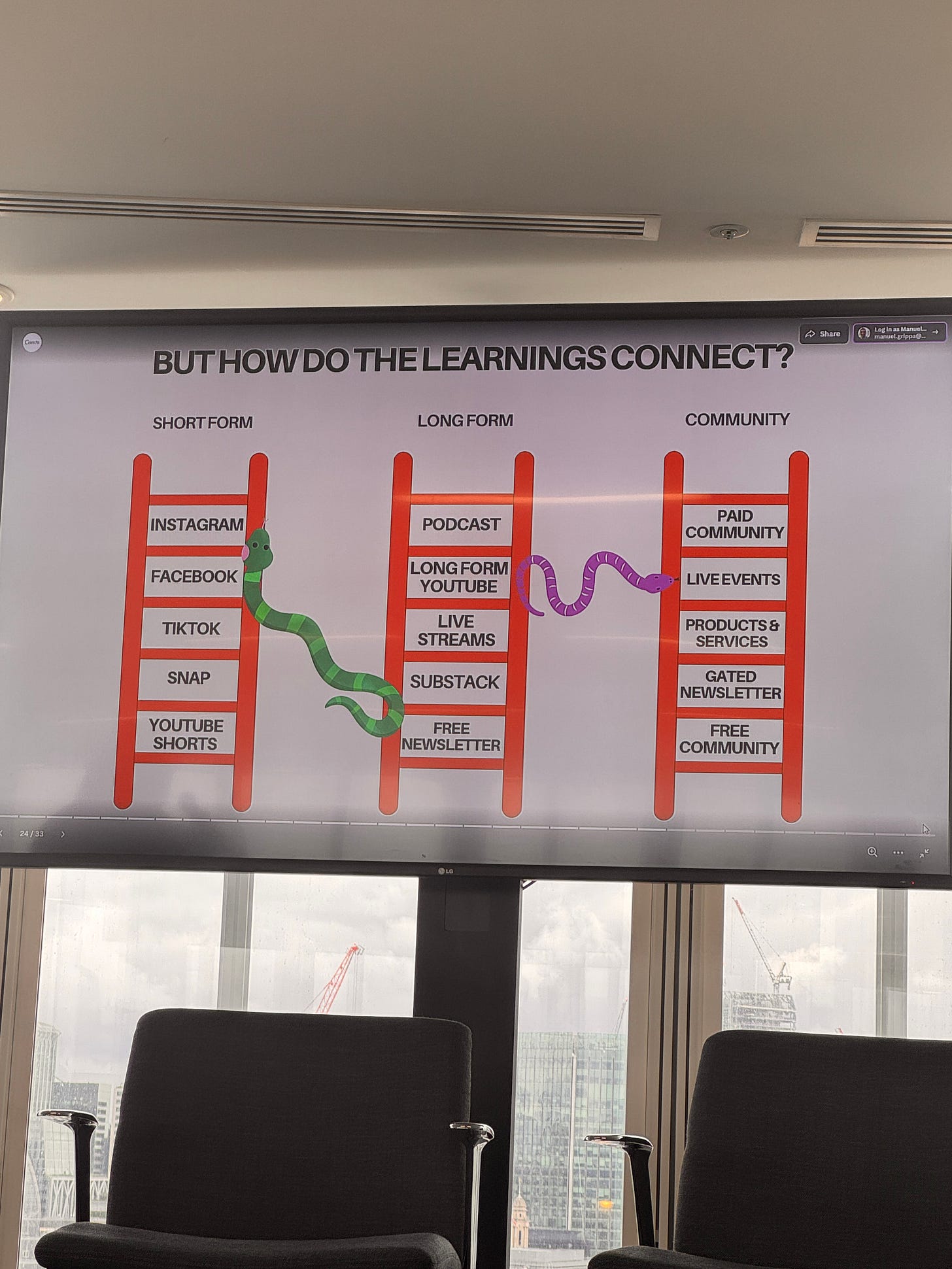
How insights from experimentation are spread across different content types at Flight Story. Luke Bradley-Jones also spoke about experimentation at The Economist, specially their Insider video product. Interestingly they made forty pilot versions of the Insider before launching the project and had a panel of thousands to help with the initial testing. Luke says they have a completion rate of over 40% which is pretty good for video and they are super-focused on the first ten minutes of any video to maintain attention. The show is also spliced into three main sections, chapters almost, to help that retention. Luke also mentioned that the Economist will be launching a new streaming product this July called ‘The Economist Play.’ Targeted at younger audiences (the ‘future subscribers’) this will be broadcast with three main shows: a ten minute news briefing, a twenty minute round up of the biggest stories and then a forty minute deep dive into a specific topic or issue. They will also be launching a series of games as well as a free tier to warm up the audience to habitual usage.
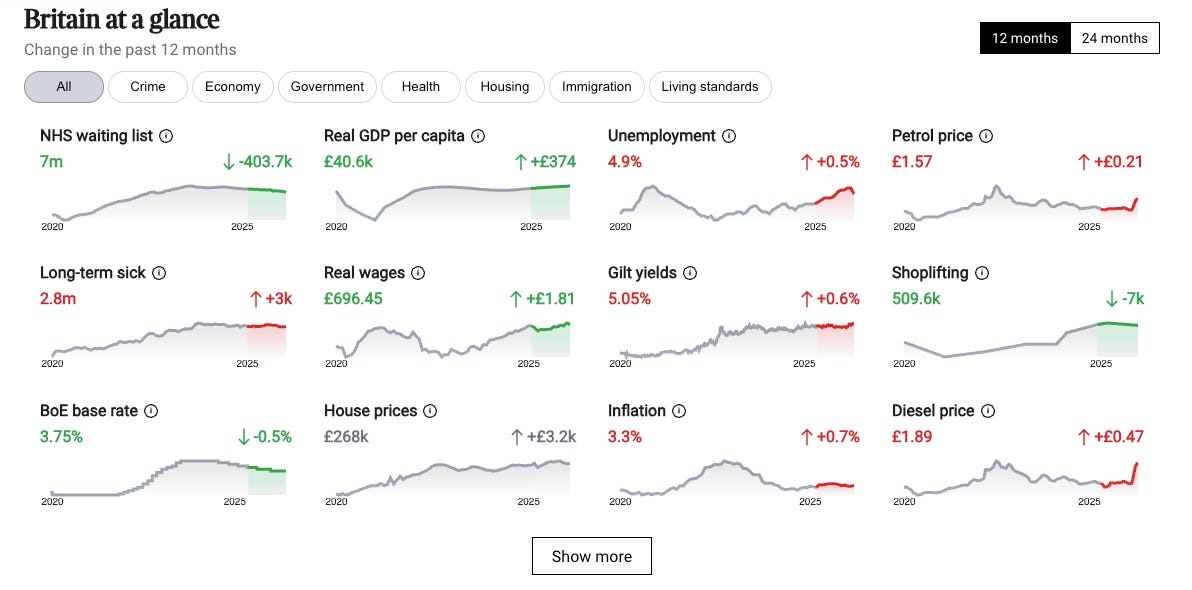
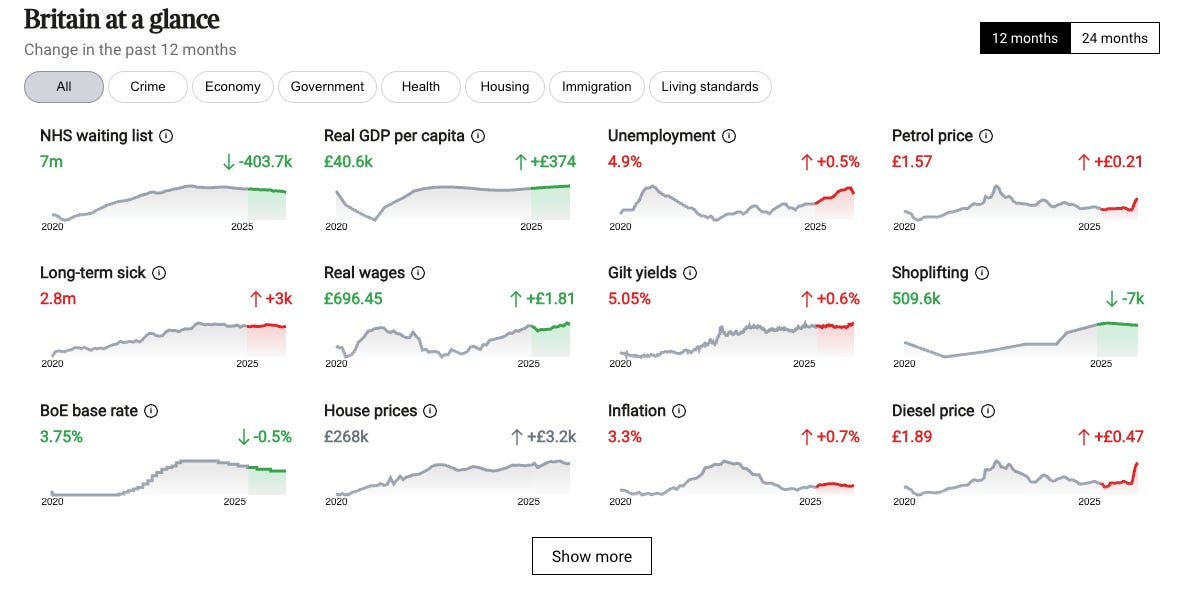
Tom Calver from The Times Data team showed us how he worked to introduce a number of data charts on their website and app based on the simple premise of showing how Britain is doing on a number of key (election) topics. It’s such a simple but brilliant idea. Kudos to him and the team for making that happen
Jim Waterson, Isabelle Roughal and Daniel Ionescu gave us honest accounts of launching their own ‘indie’ publishing businesses. The message that resonated with me was ‘sell a vision’, be laser-focused on delivering brilliantly original stories and be prepared to work 80 hour weeks. If you’re starting up yourself, then start lean and never think you need to purchase the ‘best’ or most expensive. Building up a new product takes time, and you will need every penny at the beginning just to keep going. Interesting fact from Isabelle - 50% of podcasters stop after their seventh episode. I better tell Barry that we need to keep going!
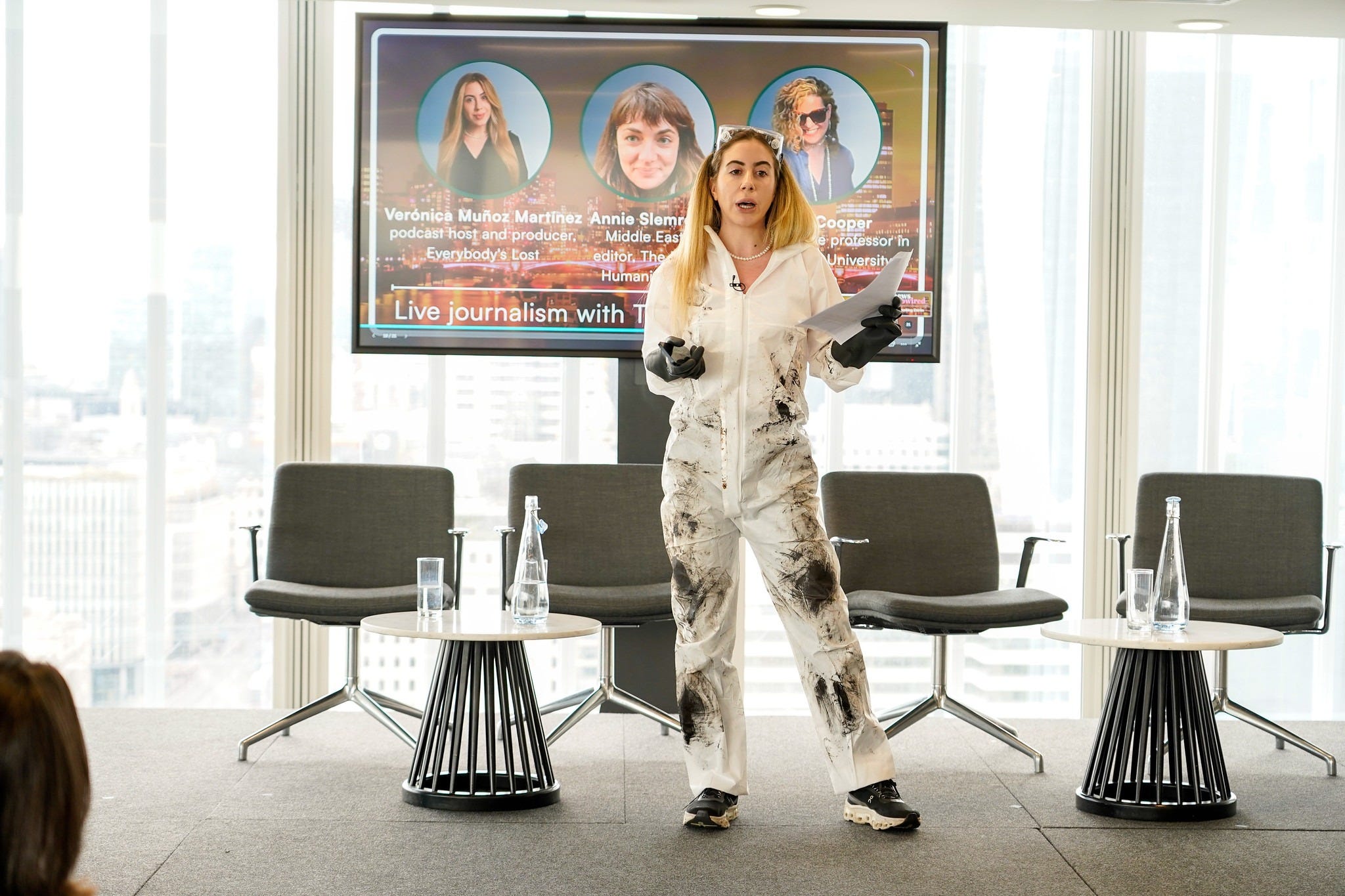
When you hear the words ‘Live Journalism’ you probably think of teams reporting back on the news in real-time. But it is also the name given to a new (ish) form of news communication via live performance and theatre. Verónica Muñoz Martínez, Glenda Cooper and Annie Slemrod gave a great overview touching on forced homelessness in Gaza and the 2024 Spanish floods. As an A-Level Theatre Studies student (which I almost flunked) this was right up my street. I think many journalists would crave the type of audience engagement and feedback they would get if they took their stories to the stage.
So that’s a wrap. Another key event in the calendar for journalists ticked and many new connections forged. I’ll be back at the next Newrewired event in November.
Related articles
Great to meet you Steven at the conference. Also, great roundup, and I stand by selling the vision 💪🏻