

This week I was fortunate enough to attend Similarweb’s Pulse ’26 conference in London. The Barbican’s brutalist architecture seemed the perfect setting for a conference about AI search and how brands are (or aren’t) adapting. Between talks, we retreated to a plant-filled space where, sipping chamomile tea, I felt as though I’d wandered into an Amazonian jungle or the pages of a J.G. Ballard novel.
So, are brands seeing shoots of growth amid the zero-click armageddon? Well, let’s see…
Don’t judge the value of AI search by last-click attribution
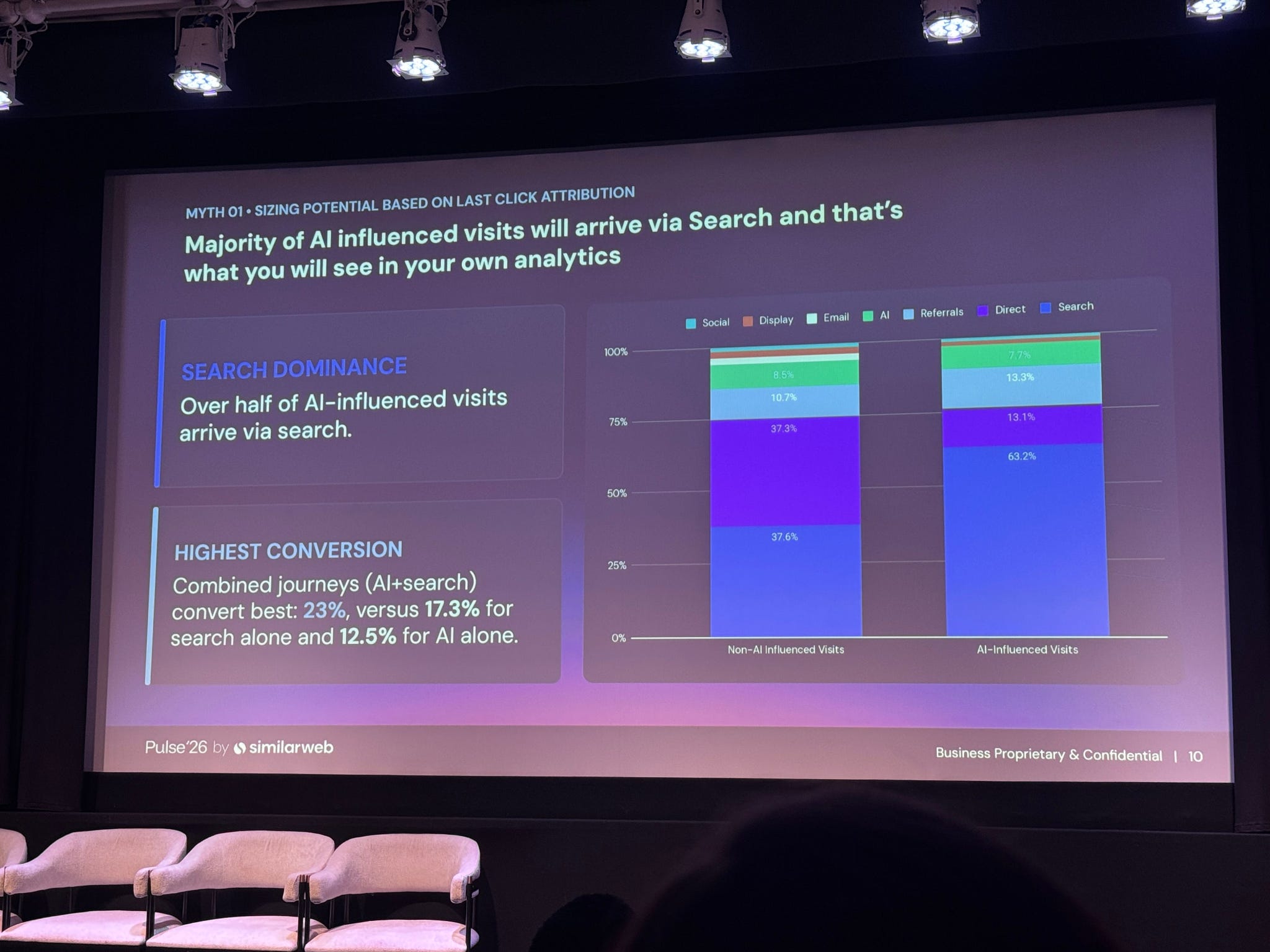
Marta Sułkiewicz (Similarweb) gave a great presentation challenging some of the assumptions around generative AI, including the idea that its measurable contribution is tiny and confined to brand discovery. She highlighted the messiness of the customer journey, which makes attribution difficult. Someone might start with an AI answer, continue researching through Google and ultimately convert via search, leaving the final click to take the credit. According to the data she presented, more than half of AI-influenced visits arrive via search.
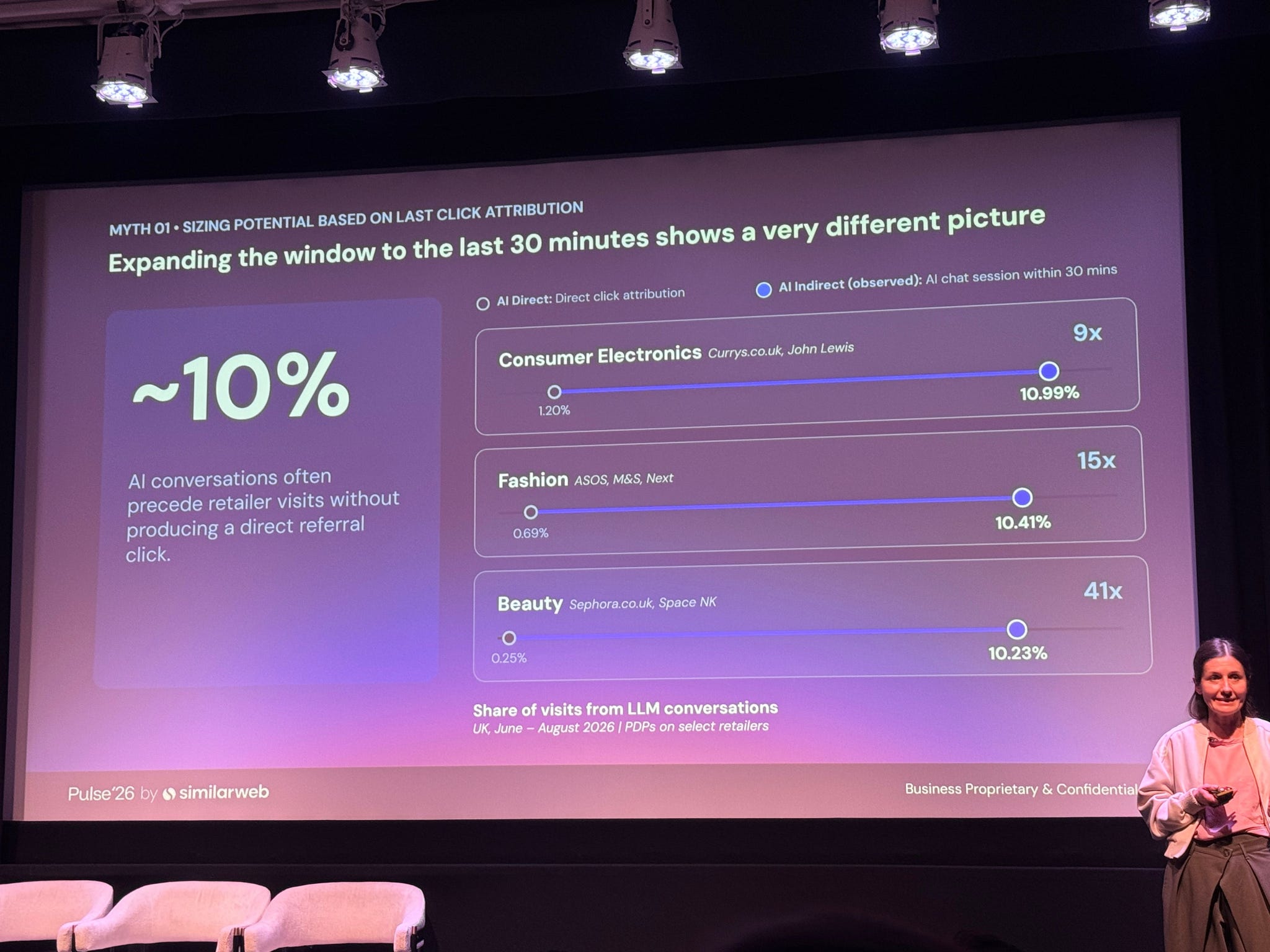
The point wasn’t to knock (Google) search but to underline how AI and Google search can work together. One figure presented was a 23% conversion rate for a particular combined journey, although the underlying cohort and definition would need checking before treating that as a general benchmark.
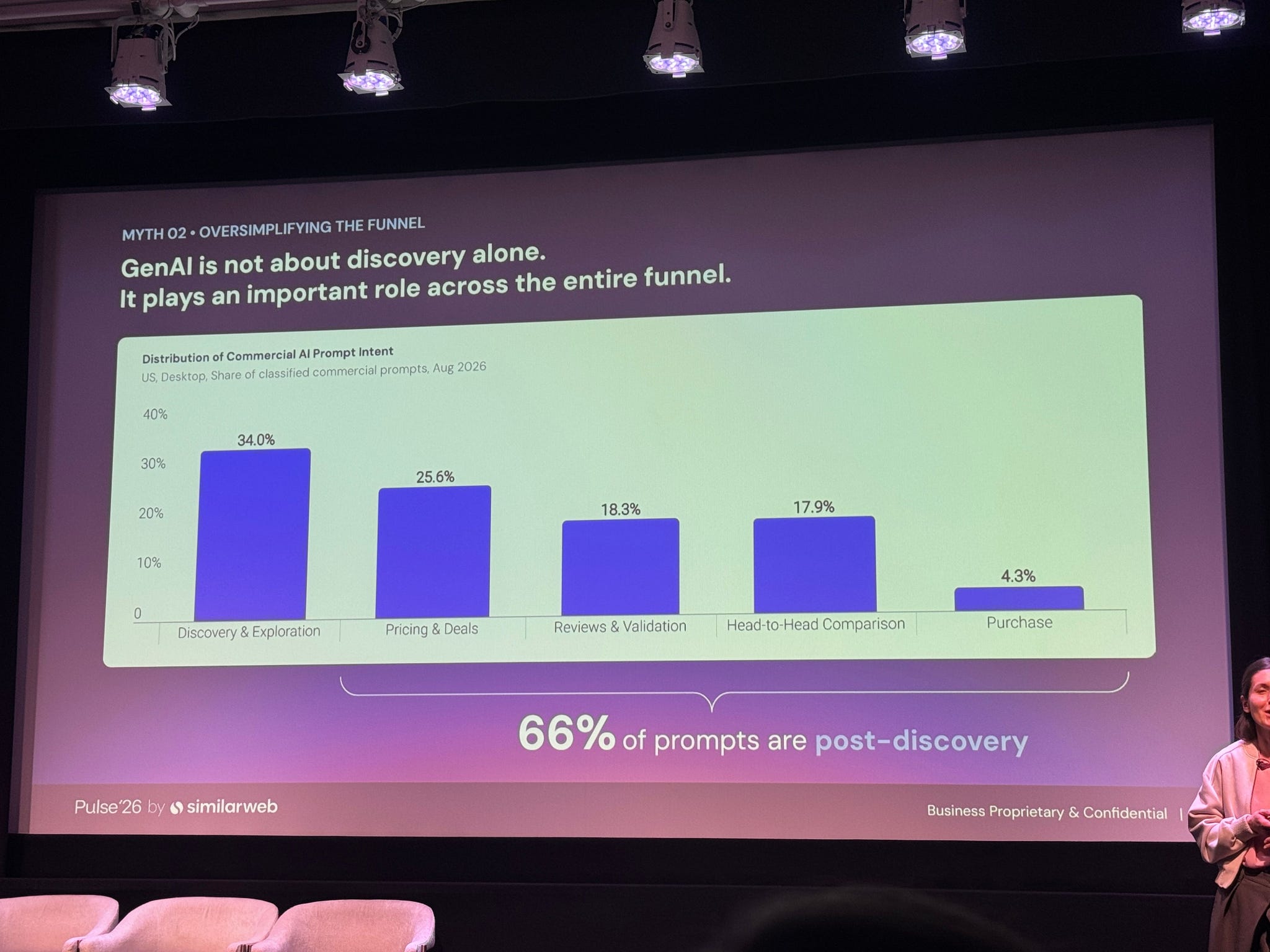
“AI is the great equaliser”
Nathalie Horley from Kingfisher made a great point: it isn’t only about how well known your brand is, but how well you can answer a customer’s need. I liked that nugget, along with her story about trying to track down a 1940s sink for her downstairs toilet. Her broader message was to get back to basics and provide a great service, even as the technology changes. How well are you looking after your customers?
“AI search is a window into your customer’s soul”
A great line from Jonny Bentwood, who described AI search as one of the most significant shifts in digital. He discussed a data discovery project with Similarweb aimed at uncovering the questions customers actually ask, rather than relying on a brand’s assumptions about its audience.
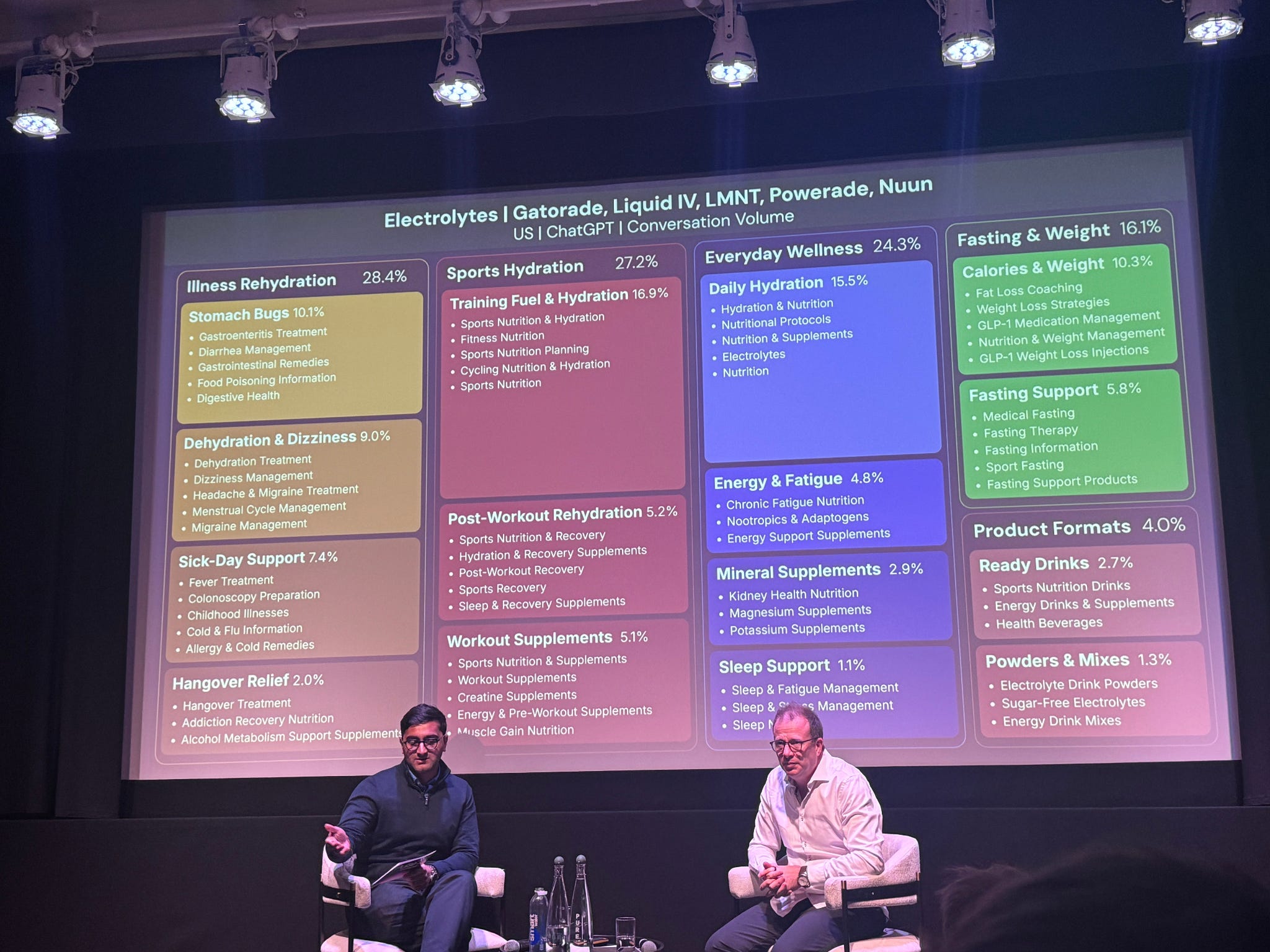
I’d be curious to see this approach built into the tool rather than presented as a standalone project. Nonetheless, he raised several useful challenges for how we approach generative engine optimisation (GEO):
Not all topics are equal. Prompt research often gives equal weight to very different themes, even though customer interest and business value vary considerably. As the slide above shows, your audience may ask about aspects of your brand that you haven’t even considered.
He also had a beef with conventional keyword research. A query can involve a broad topic, a subtopic and a very specific question. In his view, short keyword phrases surfaced by tools such as Google Trends don’t capture all that nuance.
Secondly, should we devote so much attention to answer engines beyond Google and ChatGPT? He cited their dominant share of AI search usage at 90%. With that in mind, should we spend as much attention as we do on CoPilot or Perplexity?
First impressions matter. People may trust the first AI-generated answer they see. That raises a crucial question for brands: how are you being represented in the answer, assuming you appear at all?
“Google search matters”
There was a great panel with Sarah Marshall (Condé Nast), Richard George (WPP Media) and Joey Lai (Mastercard Services), moderated by Rice Tong (Similarweb). Sarah did an excellent job connecting Google Search with AI discovery. She showed how updating an article could lead to an uplift in Google visibility, followed by increased visibility in ChatGPT. It was particularly interesting to see AI-platform data discussed alongside Google Search Console data - enabled through the publisher’s licensing deal with OpenAI.
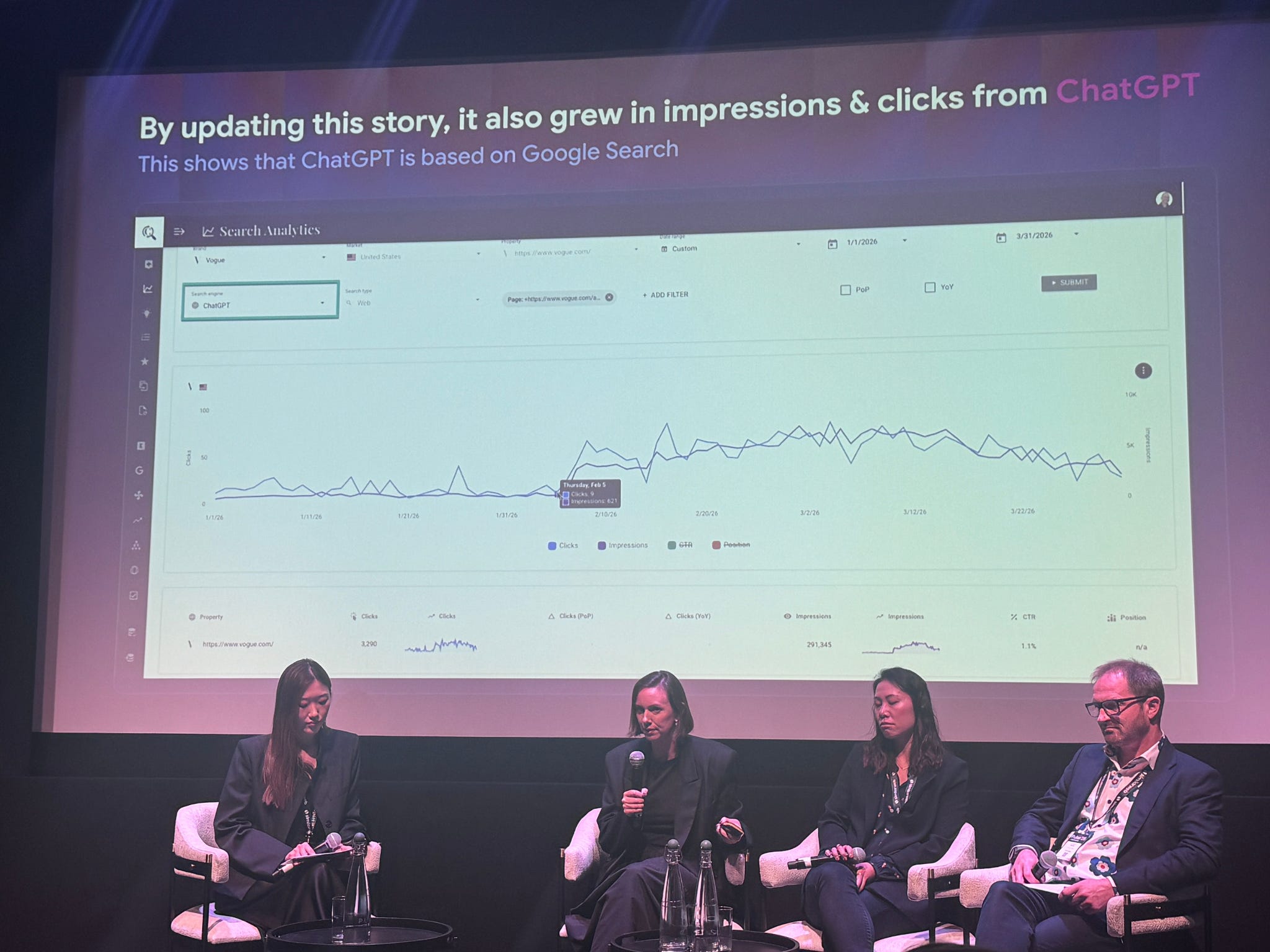
Asked whether AI search was the answer to publishers’ troubles, Sarah replied that there was ‘no silver bullet’. The panellists broadly agreed that progress would require an audience-centred approach and continuous testing. Richard also made an important point: listen carefully to what the data tells you, because a weakness revealed by AI search may be a business problem rather than simply a marketing problem.
ChatGPT advertising enters the picture
The event closed with a deep dive into advertising opportunities in ChatGPT. It was interesting to hear about this developing ad format but word on the street is that their actual ad buying tool leaves a lot to be desired. BUT judging by the furious scribbling and typing around me, I suspect media planners will be queuing up to find out more!
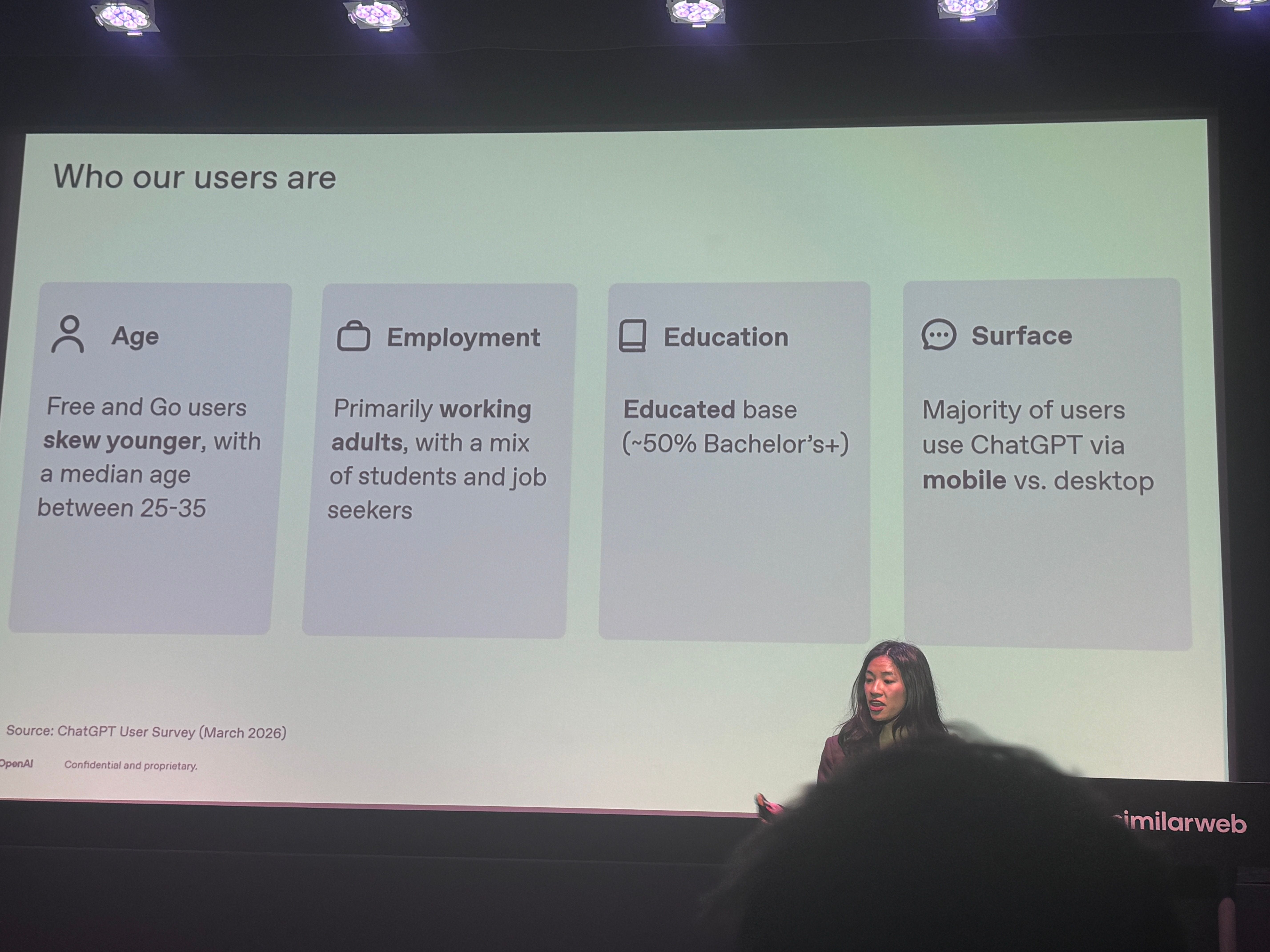
All in all, it was an informative event, not least because I got to meet my good mate Björn Darko who has a great podcast on all things SEO and AI Search.
Until next time.
Steve.