

Firstly, apologies. I’ve been a little lax with my posts recently, which I’m putting down to heatwaves, work and general life messiness.
But I’m back.
Closes Asimov book, clears throat, presses play on Metallica’s ‘Enter Sandman’.
I’ve been talking to clients recently about how zero-click is forcing news publishers to reconsider something much more fundamental than search optimisation. It’s forcing them to ask: ‘Why should audiences choose us at all?’
As part of my audience strategy work, I keep coming back to three areas that can help brands gain visibility - although some of them may sound almost insultingly simple.
All I can say is go and look at some of the biggest news brands in the world and see if you can see evidence of what I’m about to write about. Even the biggest players can overlook some of these fundamentals.
So, with my tin hat firmly on in anticipation of the backlash, here they are.
1. Be Explicit: Make the value of your journalism visible.
Many publishers overlook this fundamental brand marketing rule: have a clear value proposition.
“Value proposition?” I hear you ask. “But we knew about that yonks ago!”
But ‘value proposition’ is a phrase I hear a lot but I don’t actually see a lot.
What many people don’t realise is that there are two facets to having a value proposition - the communicating bit and then the evidencing bit.
A brand can’t merely possess value; it has to make that value explicit, visible and provable.
This counts on so many levels, not just for readers but also for bots who are always looking for signs of credibility. The truth of the matter is that many news publishers could do a lot better in this space.
I think there are a few reasons why this happens:
An internal assumption that everyone already understands the value of what you do
A belief that delivering good content is enough to demonstrate that value
A belief that this messaging belongs in the trade press or at conferences rather than on the product itself
Brand messaging being tightly controlled at the top, creating a reluctance to ‘poke the bear’ by revisiting basic questions such as ‘Who are we?’ and ‘What do we do?’
I find this area particularly fascinating because if the value proposition is not at the forefront of everything you do as a publisher then you can’t blame the audience for wondering why they should care about your particular news coverage.
That question may never be voiced, but every ignored headline and absent click is, in some small way, an answer to it.
In no way am I suggesting that these brand values should be shoved in your face every time you read a news article. I mean, if I went into a supermarket and the store rep continually harked on about their commitment to youth employment every time I asked where I could find the grilled aubergines, I’d get pretty peeved.
Most people walk into a supermarket blissfully unaware of its brand values. But they would want to know these things if, like news, they had to pay a monthly subscription of £30 for the privilege of entering that store.
That’s why an explicit value proposition can help drive subscribers and retain them. Good examples of brands doing this are The Guardian and GB News. Both are very strong at communicating what they stand for and what they are aiming to deliver, even though their editorial propositions are very different.
Let’s illustrate this further.
Let’s say I had a news brand called ‘Clarity’ (I haven’t Googled that to check if one exists, so apologies if one actually does).
For a news brand, I would say that’s a pretty good name. It sort of does what it says on the tin, to use an old phrase.
But don’t expect users to connect that with the content they are reading unless you also illustrate the WHY and the IMPACT of what you are doing.
Be explicit and audiences are more likely to understand what you stand for, remember you and consider you when they next need news.
2. Be Clear: Make that value easy to consume.
Let’s stick with this word, ‘clarity’ for a moment.
Clarity is another point that is often spoken about, like ‘values’, but gets lost in the messy business of delivering the news, particularly on social media.
Of course, any editor worth his or her salt will talk about the importance of clarity in terms of making sense of the complex. It’s the essence of news reportage.
But again, we always have to look at the individual experience of the first-time user entering your world.
Here I want to look at one specific area to expose a bigger problem, and that’s Instagram carousels.
Instagram introduced carousels in 2017 as a way to tell more complete stories within a single post. For publishers, that makes them particularly useful: instead of passively registering a headline, the audience has to actively swipe through the story.
That makes it particularly useful for journalism where you want someone to engage with an idea rather than simply register a headline.
But the interesting thing is that you’d be surprised at how hard it can be, in many cases, to actually read the text in a carousel: either there’s too much text, the font is too small, or a busy background image makes you squint.
You could also add to that the wrong choice of topics.
Every time a publisher publishes, it should be an invitation to explore the product further.
In a zero-click world, that doesn’t necessarily mean generating an immediate click. It might mean earning a follow, a return visit, a branded search or simply enough recognition to be remembered next time.
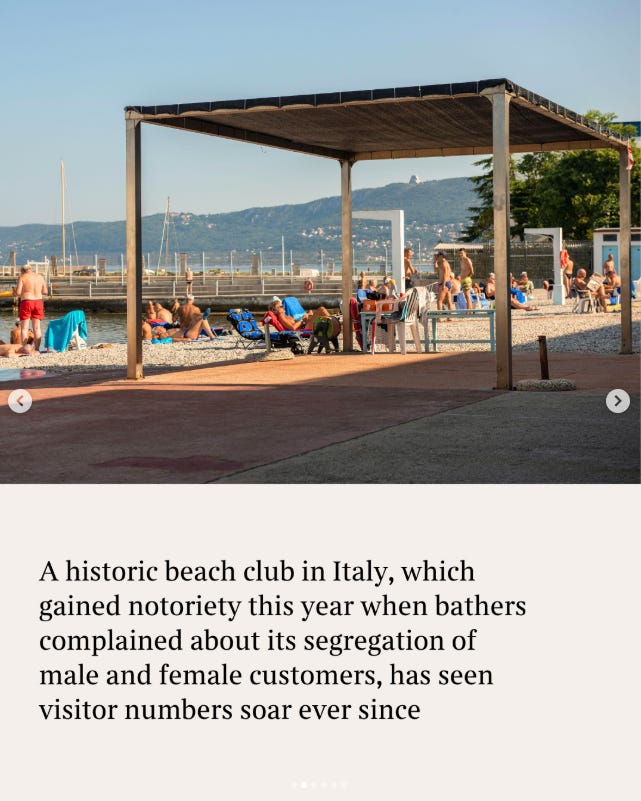
This is not a dig at social media teams because achieving perfection in a busy news environment is impossible. But you can get close to it with a review of templates and a discussion around the ultimate aim of these posts.
Usually, that comes down to having a consistent approach across every touchpoint. Demonstrate the value through the way your news is delivered, in addition to the actual content.
In this case, let clarity be your focus.
3. Be Humble: Keep changing the proposition as audience behaviour changes.
This last point is more of a mindset than a practical example.
When I think of metaphors to describe news coverage, I sometimes think of a medieval joust: lots of banners waving, horns blowing and these big brands trying to knock each other out of the tournament to gain your attention.
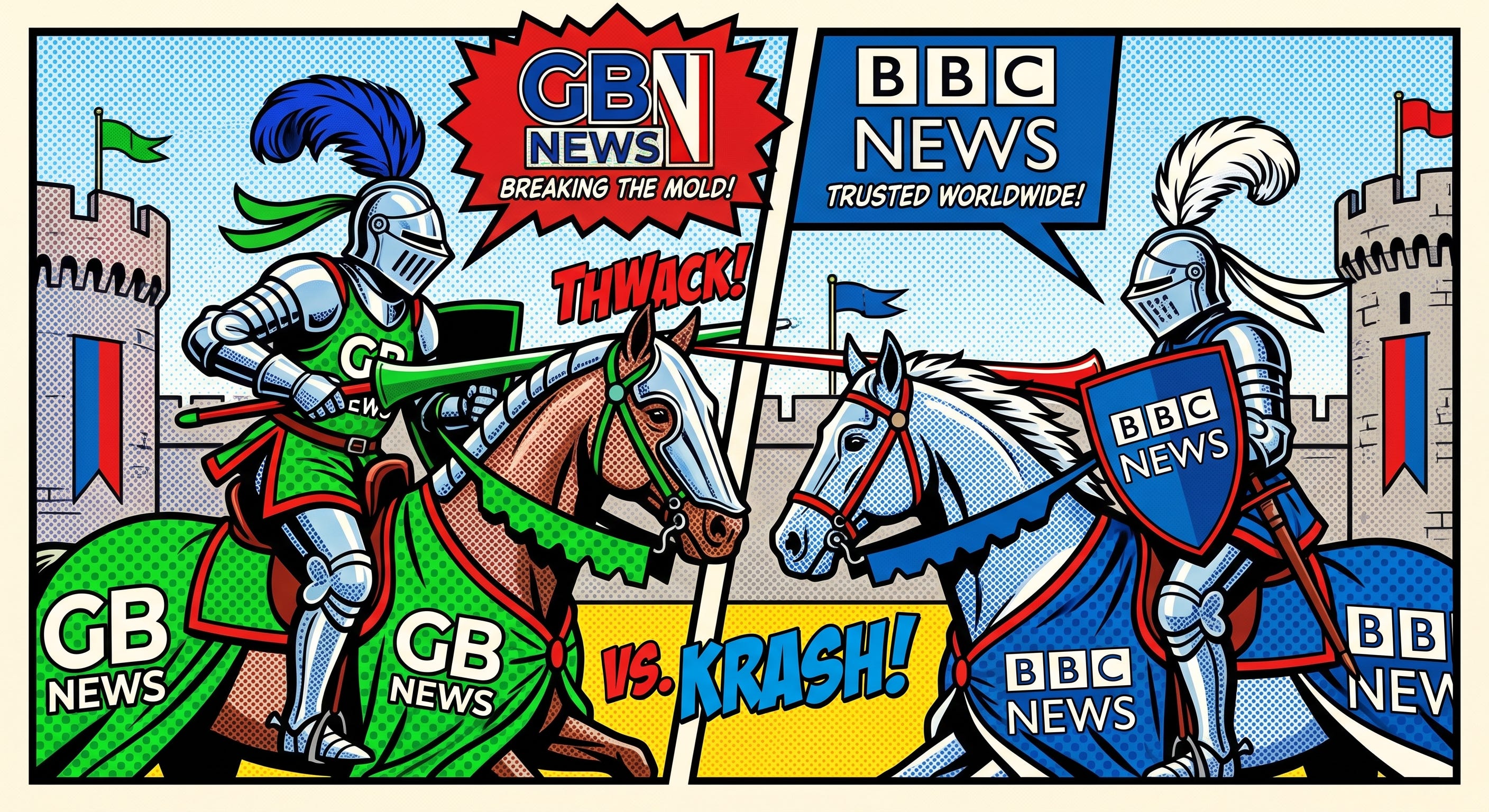
But away from the bravado and noise, I think the most successful brands are those that really take the time to study their competition and admit that some of their competitors’ output might be better than theirs.
I think having that humble mindset allows innovation to flourish faster because it means admitting your weaknesses.
Or maybe it’s nothing to do with the competition. Maybe it’s to do with where the audience has moved to.
Maybe you have a legacy of presenting the news in a formal manner, but you are seeing audiences increasingly wanting something more accessible.
News is a product, and that product has to be in tune with an audience, no matter the gravity of the coverage.
Be humble enough to revise your position, your output and even your assumptions about what audiences need. Then let the evidence guide what you do next.
So there you have it. Three deceptively simple laws that keep emerging in my client work and training sessions.
Be explicit about why you matter. Be clear in the way you demonstrate that value. And be humble enough to change when audience behaviour tells you something isn’t working.
Zero-click may be changing the mechanics of audience growth, but the fundamental challenge is increasingly straightforward: give people a reason to choose you.
If you’d like to discuss any of this further, just get in touch.
Related Articles