

Every newsroom puts huge resources into an election. Extra staff, live blogs, results maps, video, overnight shifts. It’s one of the few nights a year when readers arrive in big numbers, wanting exactly what newsrooms are good at.
So I spent the morning after the midterms looking at how US and UK news sites used that moment to sell a subscription. I didn’t find a single example where subscription was actively promoted. The paywalls were there. The pitch wasn’t.
Of course, I know I’m being more than a little harsh here because newsrooms are stretched and competition is fierce. But, nevertheless, it’s a missed opportunity, and it isn’t hard to fix. Here’s what I noted.
A gate is not a pitch
A paywall stops people reading. On its own, it doesn’t give them a reason to pay.
Every sign-up or subscription prompt needs to give readers a compelling reason to say yes. Tell them plainly what they’ll get in return, and put that message front and centre, rather than burying it in the small print.
On election night, most sites had the gate but failed to communicate the value. At the very moment readers could see a newsroom working at full stretch, nobody was explaining that this was exactly what their subscription would help pay for.
The message should have been simple: follow this story as it develops. Subscribe to stay informed.
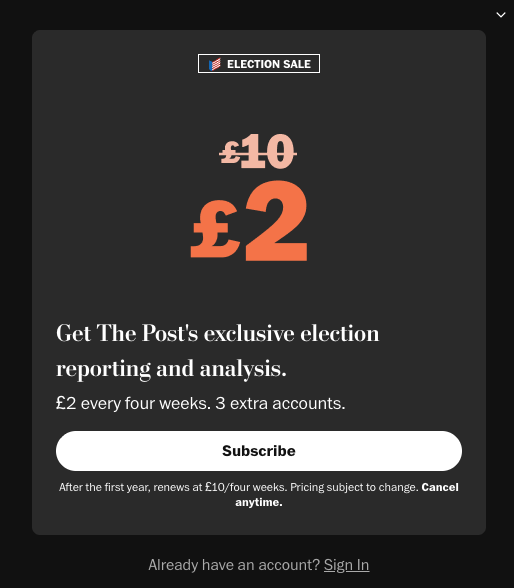
What I did see were things like this which, OK I get, but an editorially-led initiative would convert harder.
Lead with live, convert with analysis
On a night like this, readers want to know two things: what happened and what it means. They’re literally scanning for phrases like “what does this mean?” on your website, right now.
The first need is a commodity. Results are everywhere, from the BBC to Google’s own results panels and AI-generated answers. Nobody is going to pay for a number they can find for free in seconds.
The second need is where a newsroom really earns its money. Explaining what the result means for the next two years is the kind of journalism that’s much harder to replicate.
So the model almost writes itself: give the live coverage away and ask readers to pay for the analysis. Well, maybe not ALL the coverage, but the key beats replicated almost everywhere else, perhaps.
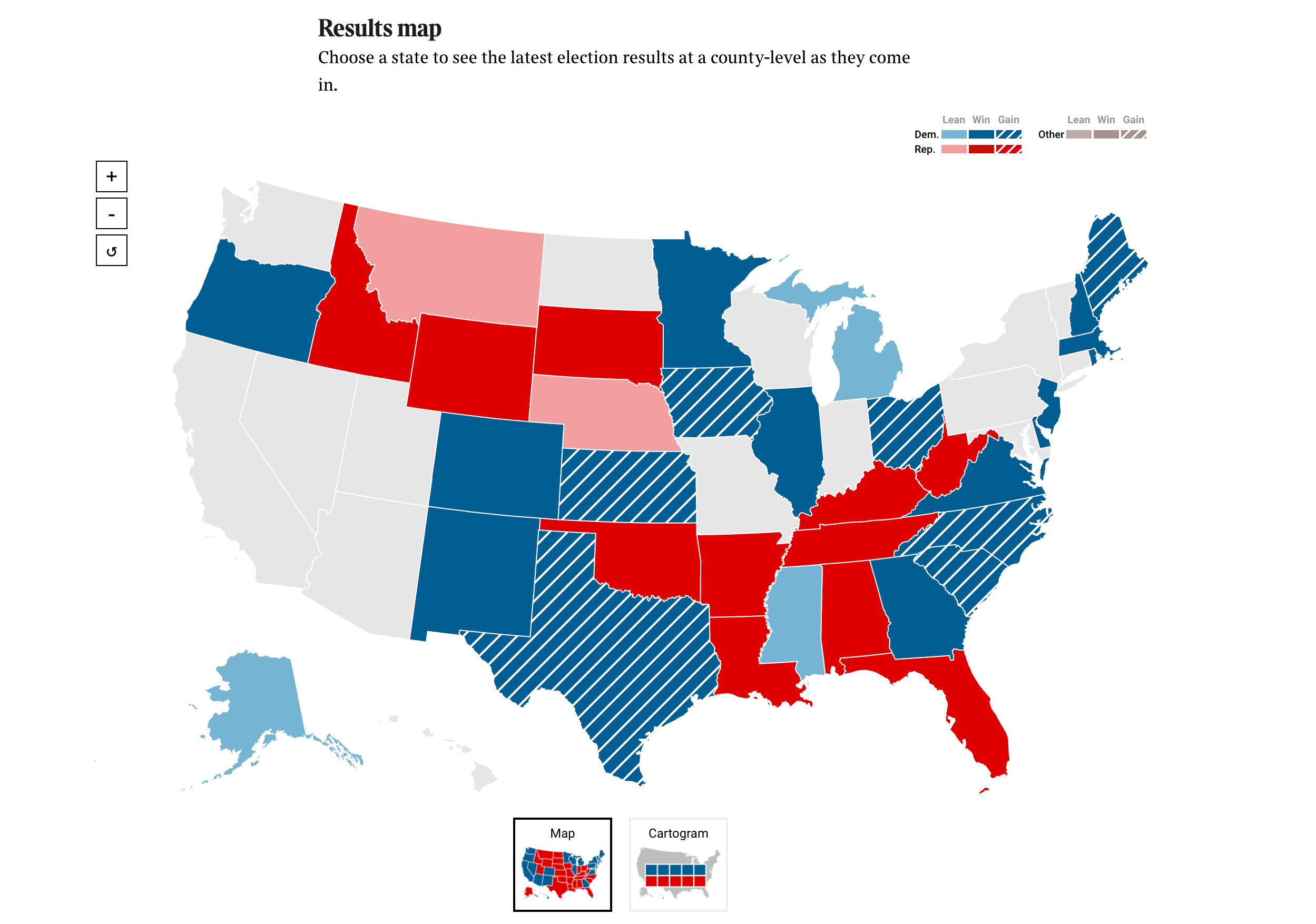
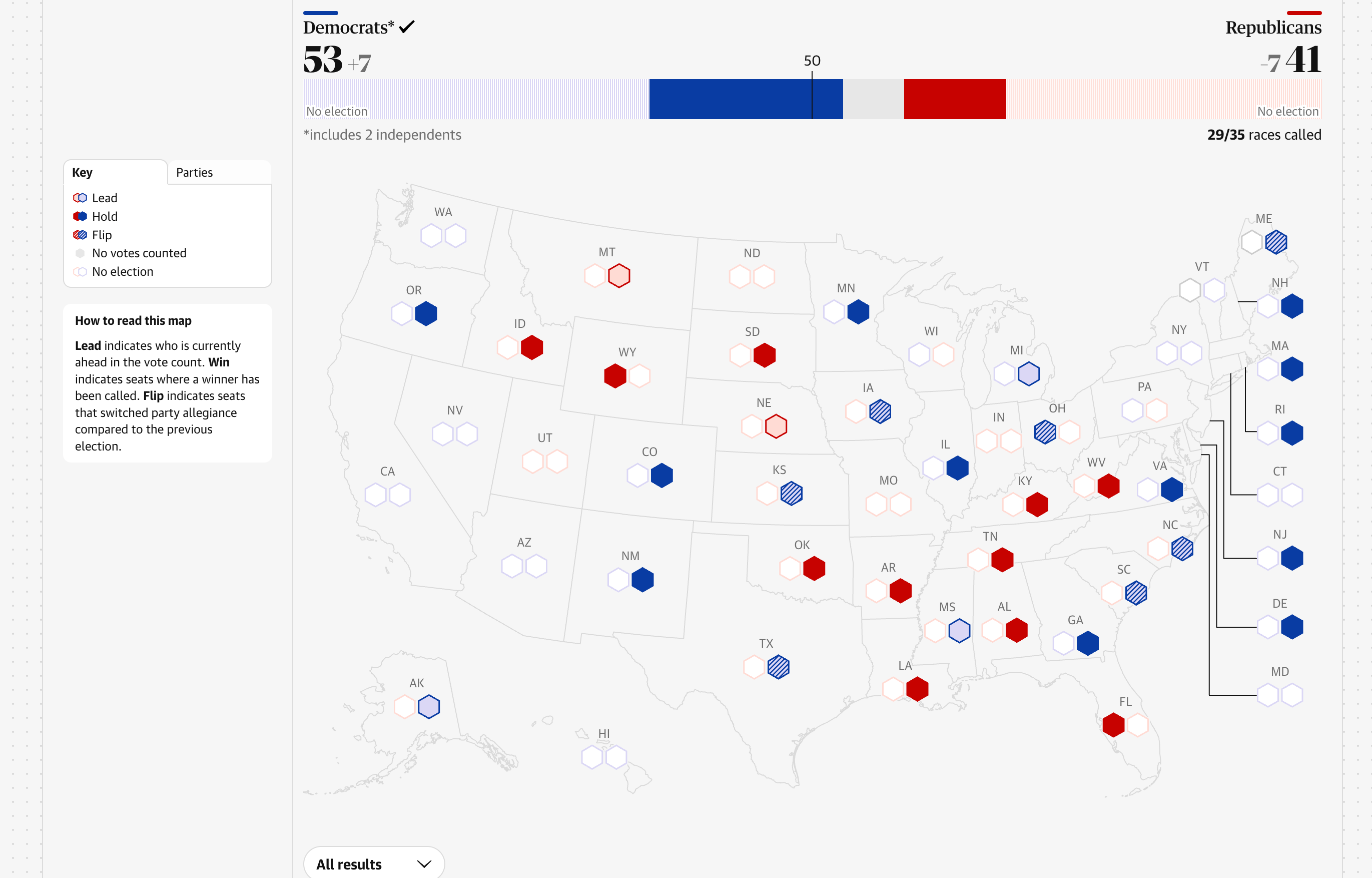
Also, be aware of dead-ends. If we take the all-important elections results charts as an example - many of the results charts I clicked through felt like standalone experiences. They worked well enough on their own, but where was the gateway to the newsroom’s best analysis?
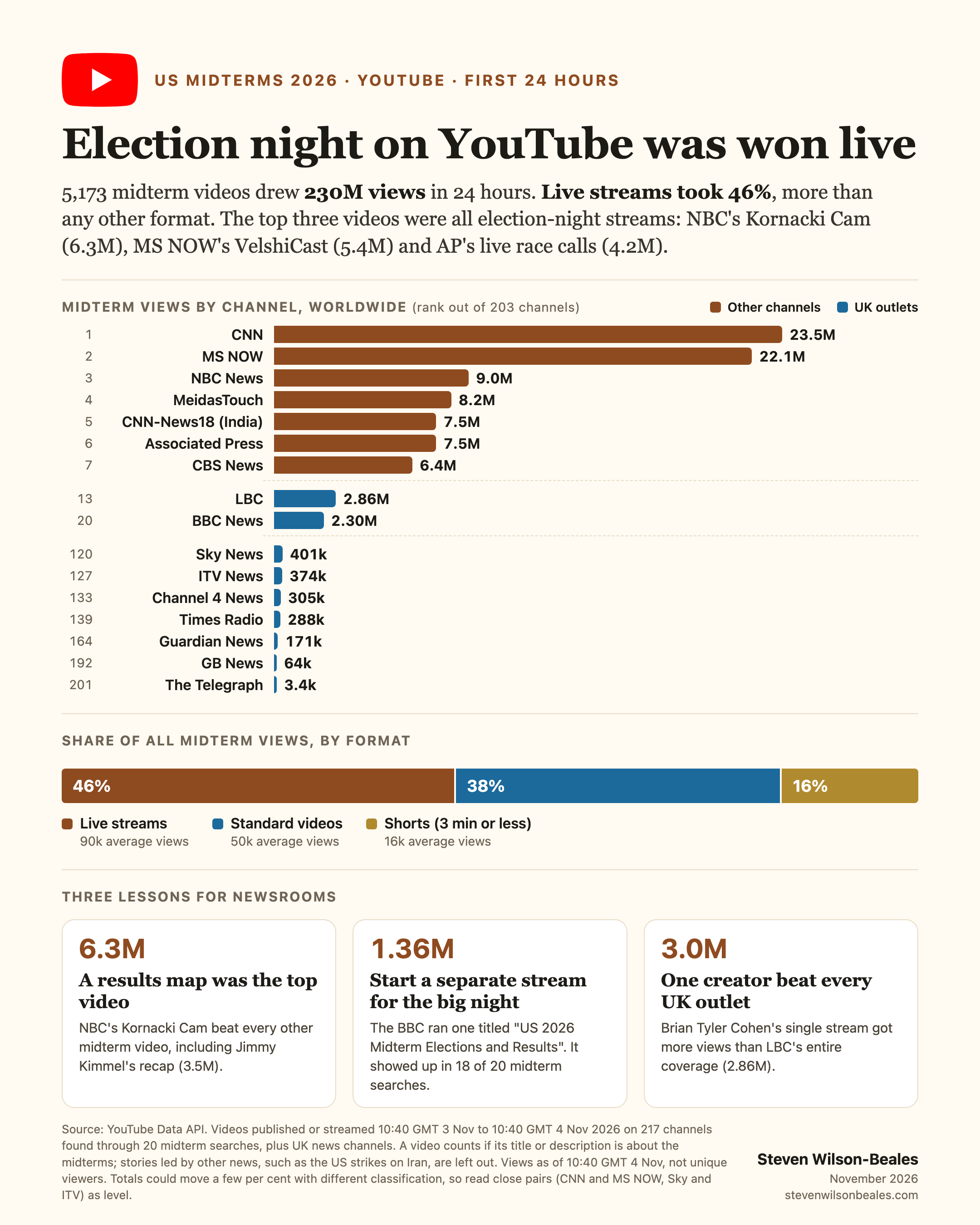
I also looked specifically at YouTube performance over a 24 hour period for midterm coverage. The results below speak for themselves but I was intrigued by LBC, a smaller UK news operation you might argue, that (for this time period at least) was beating the BBC through its coverage debating the significance of the results.
The missing middle step
Not everyone who lands on election night is ready to pay. Many would happily follow you, though, if you gave them an easy way to do it.
When readers land, do they see your full offering? Do they know they can follow you on the platforms they prefer?
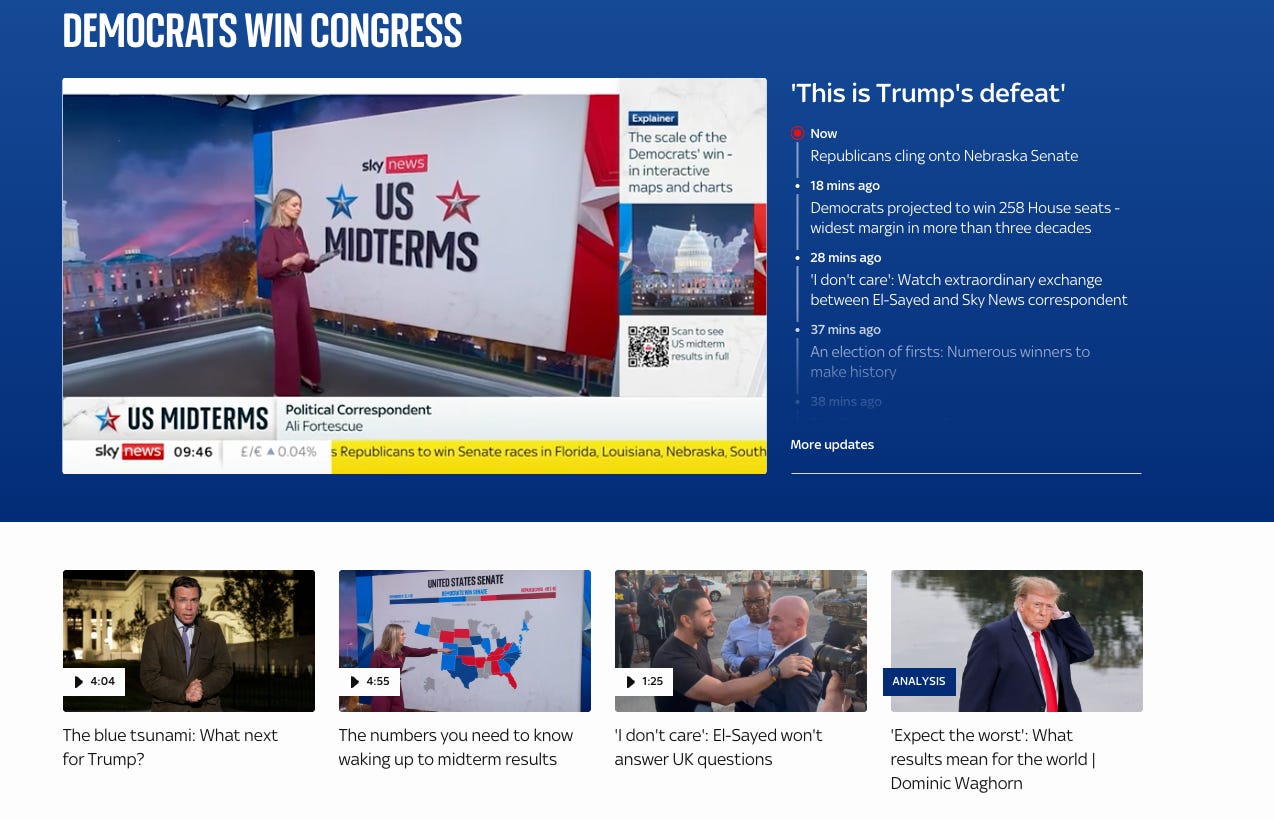
Sky News is a good example. Leading with video is a no-brainer for Sky, and its homepage clearly pushes people into video. Surprisingly few newsrooms do this on their homepages. But where was the newsletter I could sign up to? Or the social media accounts?
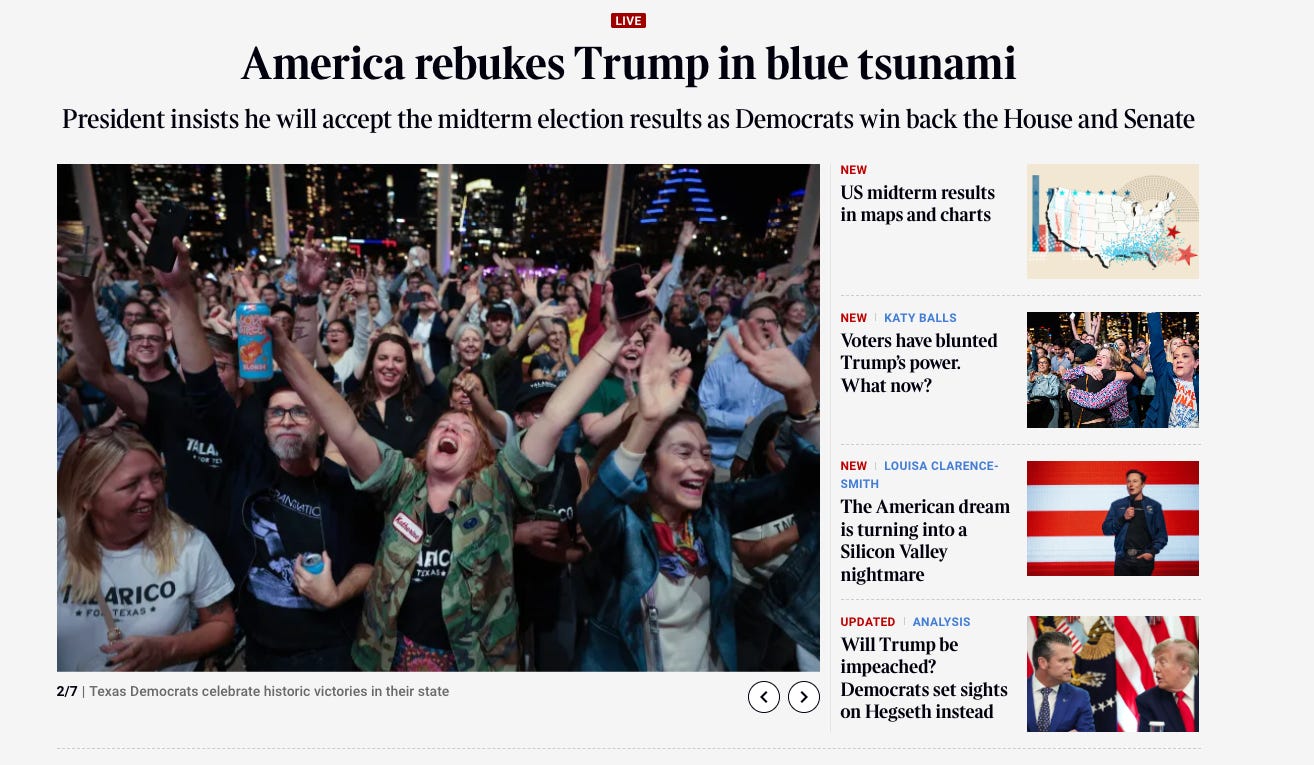
And there’s a similar pattern across other news sites like The Times…
or the Guardian..
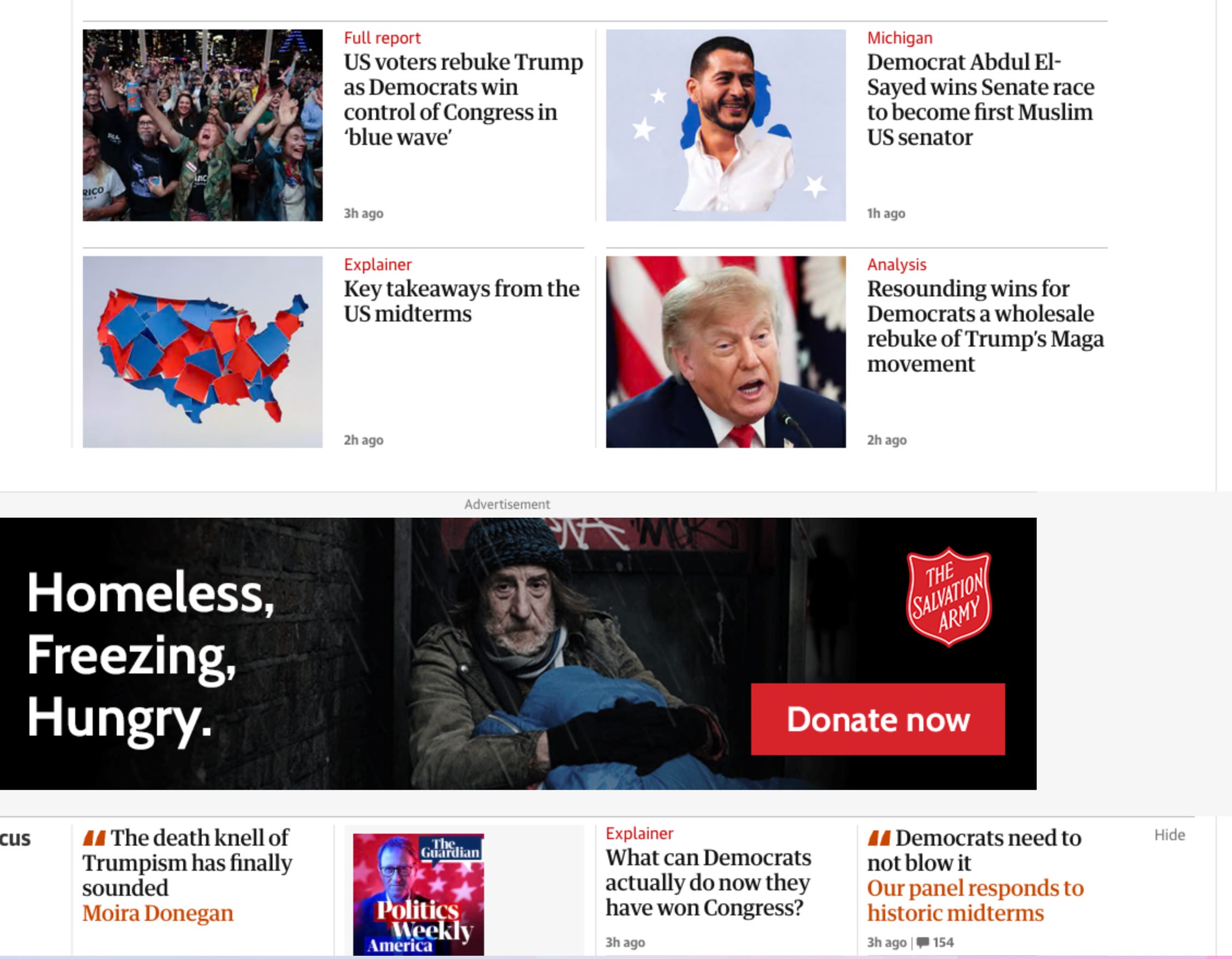
The publishers that convert well treat a free sign-up as a step towards a subscription. Registration comes first and payment comes later. The newsletter is what turns a one-night visitor into a habit, and subscribers who get one are less likely to cancel.
On election night, “get tomorrow morning’s results briefing” is an easier ask than “subscribe now”. It also gives you a second chance to make the subscription pitch.
NOTE: I think this point is more about template limitations of a content management system rather than anything else. There’s also a legacy of news websites having to look like their printed predecessors - but that’s a topic for another newsletter.
The pitch was buried, generic or both
Where subscribe buttons did exist, they were tucked away on article pages.
Buttons like these need to be on the homepage on a night like this. That they aren’t points to CMS templates that can’t flex for a big moment. Can newsrooms afford that rigidity any more?
And the messages that did appear weren’t written for the election.
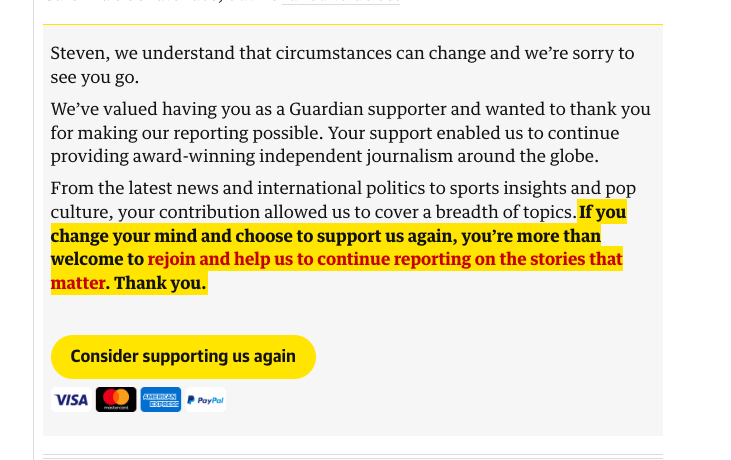
Changing the message for the big moments in readers’ calendars is one of the simplest ways to lift sales. Election night is about as big as moments get.
What you’re up against
The reason this all matters is the competition for that “what happened” moment. Just take a look at Google for example. Why would users want to click into your website after reading this data?
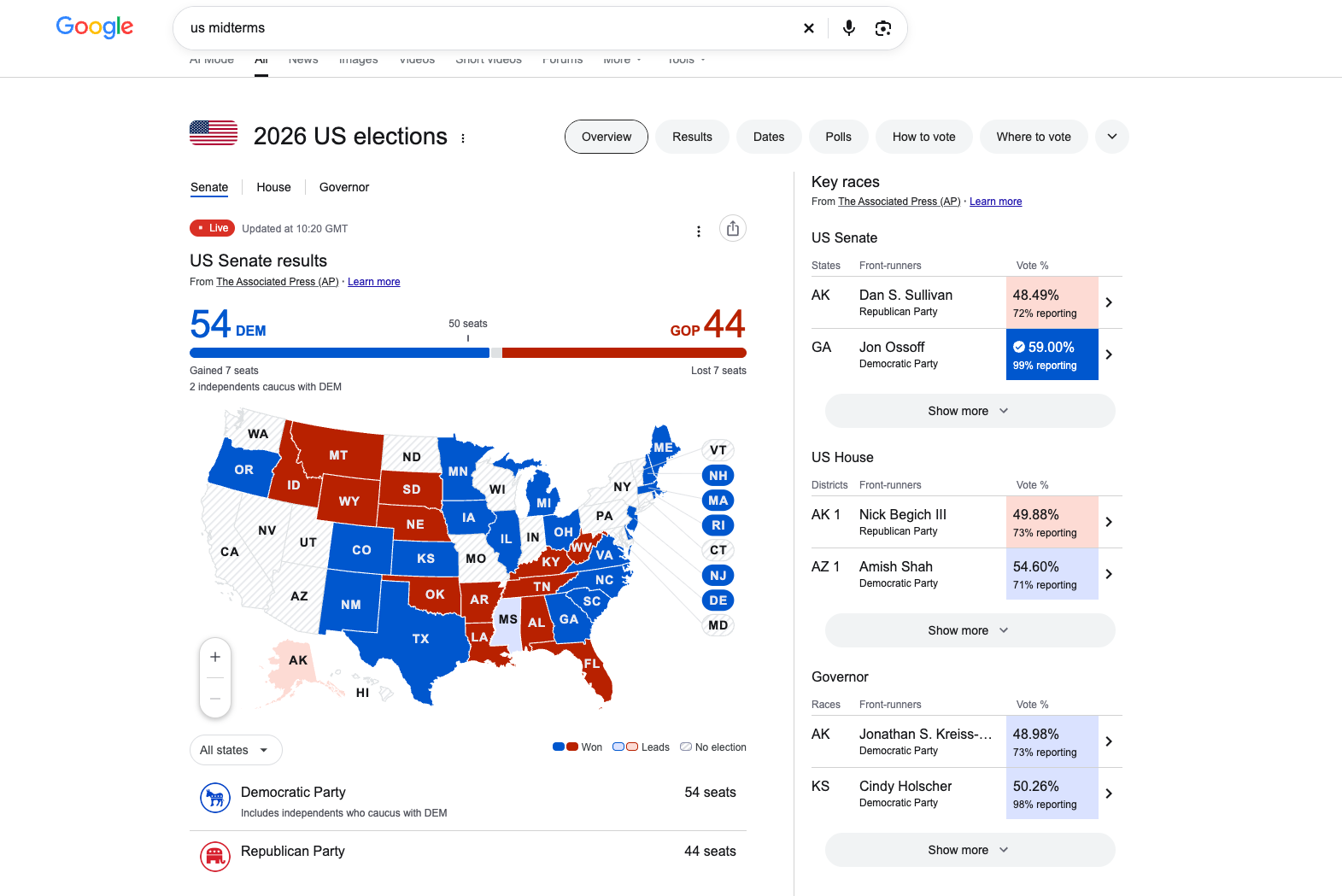
If a reader can get the facts there for free, the only thing left to sell is your take on them.
I also saw, here in the UK, that the BBC also dominated the search results with blocks like the ones below. Infuriating to those other news providers who are doubling-down on video and well worth using a search consultant to explore why this is happening 😊.
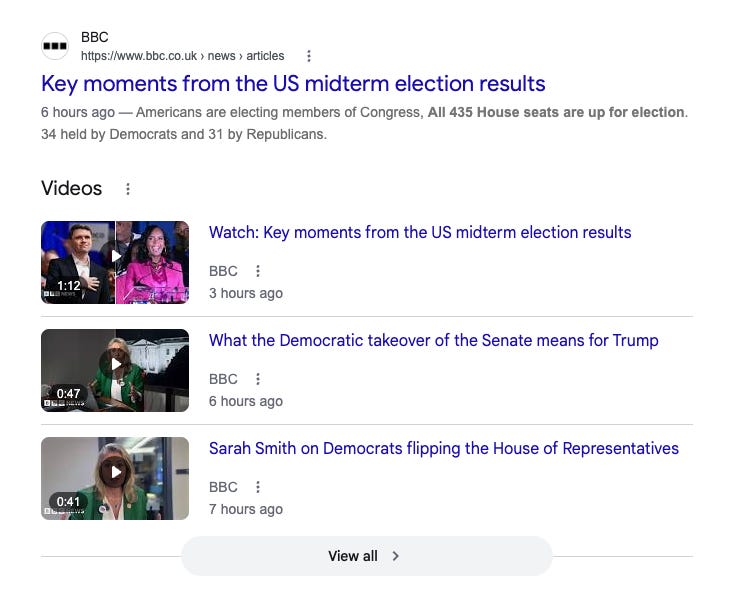
That makes the next failure harder to excuse. “Blue tsunami” was repeated everywhere. When every outlet runs the same headline, readers have no reason to pick yours, let alone pay for it.
Thinking ahead…
Again, without wanting to sound like Sauron issuing commands from on high, these are the kinds of things I’d like to see publishers doing more of in future.
One election-specific message on the homepage. “Follow this story as it develops” leading to an upsell.
(Some) Live coverage free, analysis behind the wall. Every results page and chart should link to the “what it means” piece.
A free sign-up for readers not ready to pay. A results briefing newsletter the next morning, offered on every live page.
One simple offer. A single plan with a single reason to buy, not a menu.
Less clutter around the pitch. Clean, text-led calls to action placed inline, not lost among ads and unrelated stories.
Templates that can flex. If the CMS can’t change the homepage and paywall copy for one night, fix that before the next election.
Headlines of your own. If yours reads like everyone else’s, readers have no reason to choose you.
Until next time,
Steve
Great timely analysis, Steven. Fair points. I’ll say on our end, we sought to keep commodity results free to access and ask for an email sign-up (“soft wall”) for our more thoughtful analysis. I agree that we can all do a better job with the value proposition, especially when there’s no shortage of choice for users.