

Today’s edition of Publishing Strategies is a bit different. I wrote this after seeing lots of instances where brands have invested heavily in AI-generated content for their blog without tackling the main issues below. If you are a brand and seeking further advice please reach out via me@stevenwilsonbeales.com.
It’s no secret. With the current challenges to traffic, brands are looking at how they can squeeze more from every aspect of their content operation. Blogs have become a core focus because they’re not only a great way of educating audiences about your products and values, but—now with LLMs in the mix—they are also a great way of gaining visibility for key prompts.
However, many blogs fail to drive conversions because of a lack of strategic focus. This often leads to a failure to attract the ‘right’ kind of visitors such as casual readers with no intent to purchase. The issue is also compounded with content teams being ‘pressured’ to use AI-generated blog posts to rapidly achieve scale without precisely nailing those strategic goals. The results are often less than ideal.
So, what’s the answer? Well let’s take a look at some of the most common issues and how to tackle ‘em.
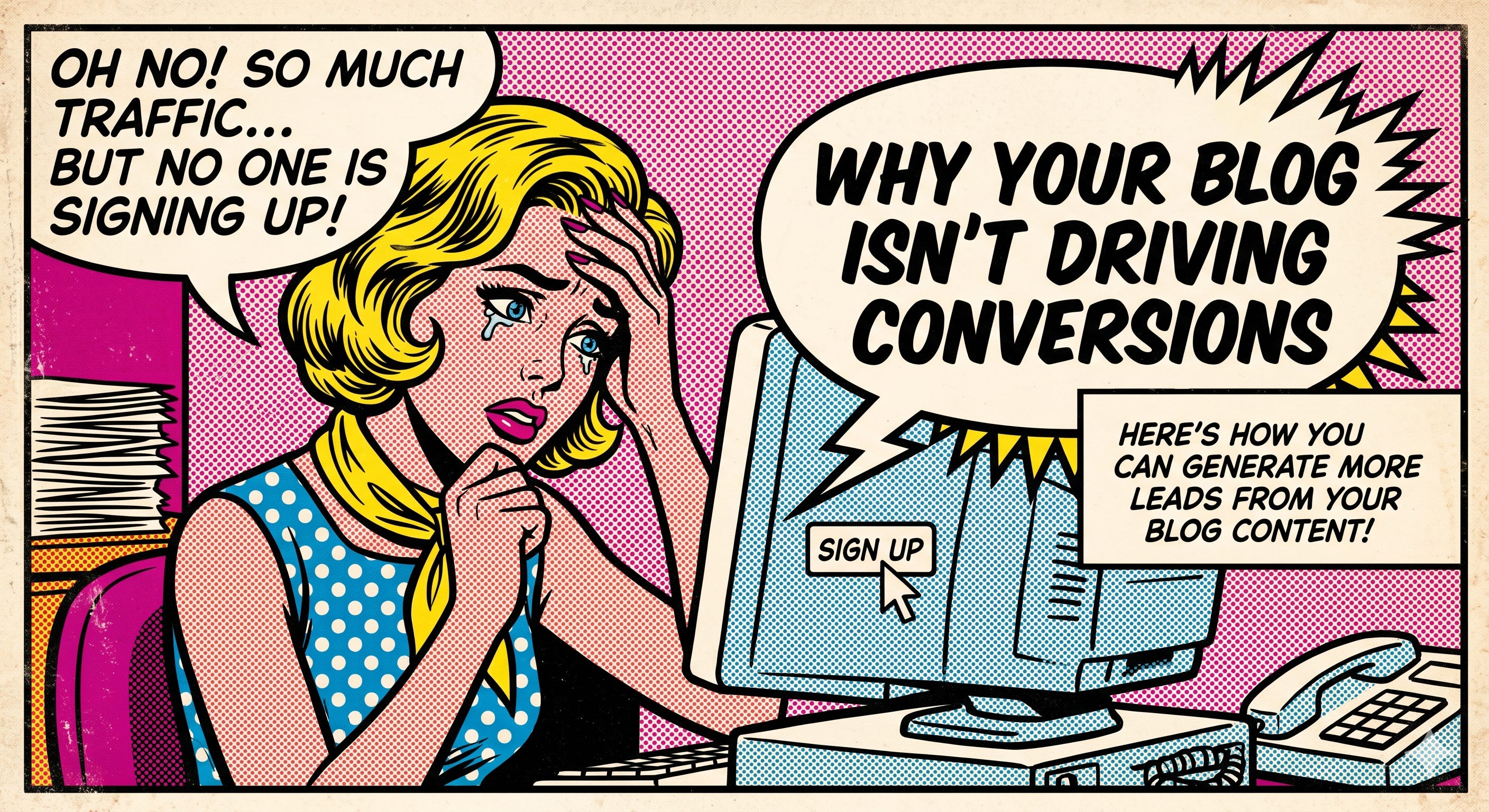
You’re writing for traffic, not intent
Traffic is useful, but only when it comes from the right audience.
An issue I see quite a lot is brands choosing to write about certain topics because they have a high search volume. It’s an easy mistake to make - more searches should mean more opportunity, right? But high-volume keywords are often broad, early-stage and commercially weak.
For example, a project management software company could publish an article on “How To Be More Productive.” That topic may attract plenty of readers, but many of them are not actively looking for software. Some may be students. Some may be freelancers. Some may simply want a few productivity tips.
Compare that with topics like “Best Project Management Software For Agencies,” “Trello Alternatives For Growing Teams,” or “How To Manage Client Projects Across Multiple Departments.” These searches are narrower, but they reveal far more about the reader’s problem and buying context.
A good content strategist will always ask: Who is searching? What are they trying to solve? How close are they to needing a product or service? What should they do next?
Your calls to action are weak
Many blog posts end with a vague call to action: “Contact us,” “Learn more,” or “Subscribe to our newsletter.”
These CTAs aren’t particularly wrong, but they are often disconnected from the actual message of the article.
If someone reads a post about fixing content decay, the next step should not be a generic company newsletter. A stronger CTA might offer a content decay audit, a checklist, a diagnostic call, or a guide to updating underperforming pages.
In other words, the CTA should match the reader’s intent.
Someone reading a top-of-funnel educational article may not be ready to book a sales call. But they may download a template, subscribe to a practical email series, or read a related case study. Someone reading a comparison page, on the other hand, may be much closer to a demo or consultation.
Your blog should not rely on one CTA for every reader. It needs intent-matched next steps.
You have no product-led content
A lot of blog content is useful but commercially detached.
What do I mean by this?
Well, it explains the problem, gives advice, but then stops before connecting the issue to the product, service or solution. This often happens because teams are afraid of sounding too sales-led. They want to be helpful, so they avoid mentioning what they sell.
That is a mistake.
Product-led content does not mean turning every article into a sales pitch. It means showing how your product, service, framework or expertise helps solve the problem being discussed.
So, if you are a private clinic writing about knee pain, explain how your assessment process works and when someone should seek specialist help. If you’re a mental health provider writing about anxiety, show how different therapy options support different needs.
Remember, readers do not just need information. They need to understand why you are credible, how you think, and how you can help.
A blog that never connects expertise to commercial value will struggle to generate qualified leads.
You’re publishing isolated articles instead of topic clusters
This one is a classic.
Many companies publish content as a list of disconnected ideas. One week they write about trends. The next week they write about tools. Then they publish a founder opinion piece, followed by a generic how-to article. But one-off blog posts rarely build authority on their own.
Each article may be fine individually, but together they do not create a clear content architecture.
Bots and buyers both need structure. They need to see that you understand a topic deeply. That means building clusters around important themes.
For example, instead of publishing one article on “skincare,” a beauty brand might build a cluster around:
What a good skincare routine looks like
How to build a skincare routine for your skin type
Skincare routine examples for morning and evening
Skincare for dry, oily, sensitive or combination skin
Cleanser vs toner vs serum vs moisturiser
How to layer skincare products correctly
Skincare ingredients to look for, such as hyaluronic acid, niacinamide or retinol
How to choose the right products for your skin concerns
Common skincare mistakes
How to measure whether your skincare routine is working
These pieces should link to each other and support a core commercial page. That is how you build topical authority and guide readers through a journey.
A scattered blog creates scattered results.
You are missing bottom-of-funnel pages
Many blogs over-invest in educational content and underinvest in bottom-of-funnel content.
Bottom-of-funnel, or BOFU, content targets readers who are actively comparing options, evaluating providers or preparing to buy.
Examples include:
“Best X software for Y”
“X alternatives”
“X vs Y”
“How to choose an X agency”
“Content marketing agency for SaaS”
“SEO consultant for B2B companies” - you don’t need to look too far for that one ;)
Case studies
Service comparison pages
These pages may not always have huge traffic potential, but they often attract people with much stronger commercial intent.
If your blog only answers broad educational questions, you may be helping future buyers without giving current buyers a reason to choose you.
A balanced content strategy needs content for every stage of the journey: awareness, consideration and decision.
There’s no conversion path
Even strong content will underperform if there is no clear path from reading to action.
Ask yourself the following questions:
What happens after someone lands on a blog post?
Can they easily find a relevant service page?
Is there a related case study?
Is there a useful lead magnet?
Are internal links guiding them to the next logical step?
Is the CTA visible?
Does the page explain who you help and what you do?
A page should NEVER live in isolation.
Every key article should have a clear purpose. Some should bring the right people to your site. Some should build confidence in your expertise. Some should help readers understand their options. Others should encourage them to take action.
Once you know what each page is meant to do, you can create a stronger next step — whether that is reading a related guide, requesting a quote, booking a call or speaking to an adviser.
The real issue: your blog is not connected to revenue 💰💰💰
A blog creates REAL business value when it is built around buyer intent, commercial relevance and clear conversion journeys.
That means choosing topics because they matter to your audience and your business. It means creating content clusters instead of random articles. It means publishing BOFU pages, not just educational posts. It means using calls to action that reflect the reader’s stage of awareness. And it means connecting your expertise to the problems your product or service solves.
The goal is not simply to get more traffic- it’s to attract the right people, answer the right questions, build trust, and make the next step obvious.
If you would like help with any of the issues raised above, please reach out to me via me@stevenwilsonbeales.com
Related articles