

It’s been a bit of a podcast-themed week for me. The amazing Jessie and Shelby from WTF is SEO? invited me to their Spring Community Call to talk about all things Podcast SEO, I then recorded a podcast with Barry Adams about Podcast SEO and then I went to The Podcast Show in London to learn about everything except Podcast SEO.
In short: A true keyword-stuffed bonanza!
This was my first time at the conference, which was a great place to swot up on practical tips and get a sense of where the industry is heading. There was even the obligatory pair of conference socks which I politely declined in favour of a rather tasty sherbet dip. And if that’s not eye-watering enough, here are five of my key takeaways:
1.Not every podcast has to be a video
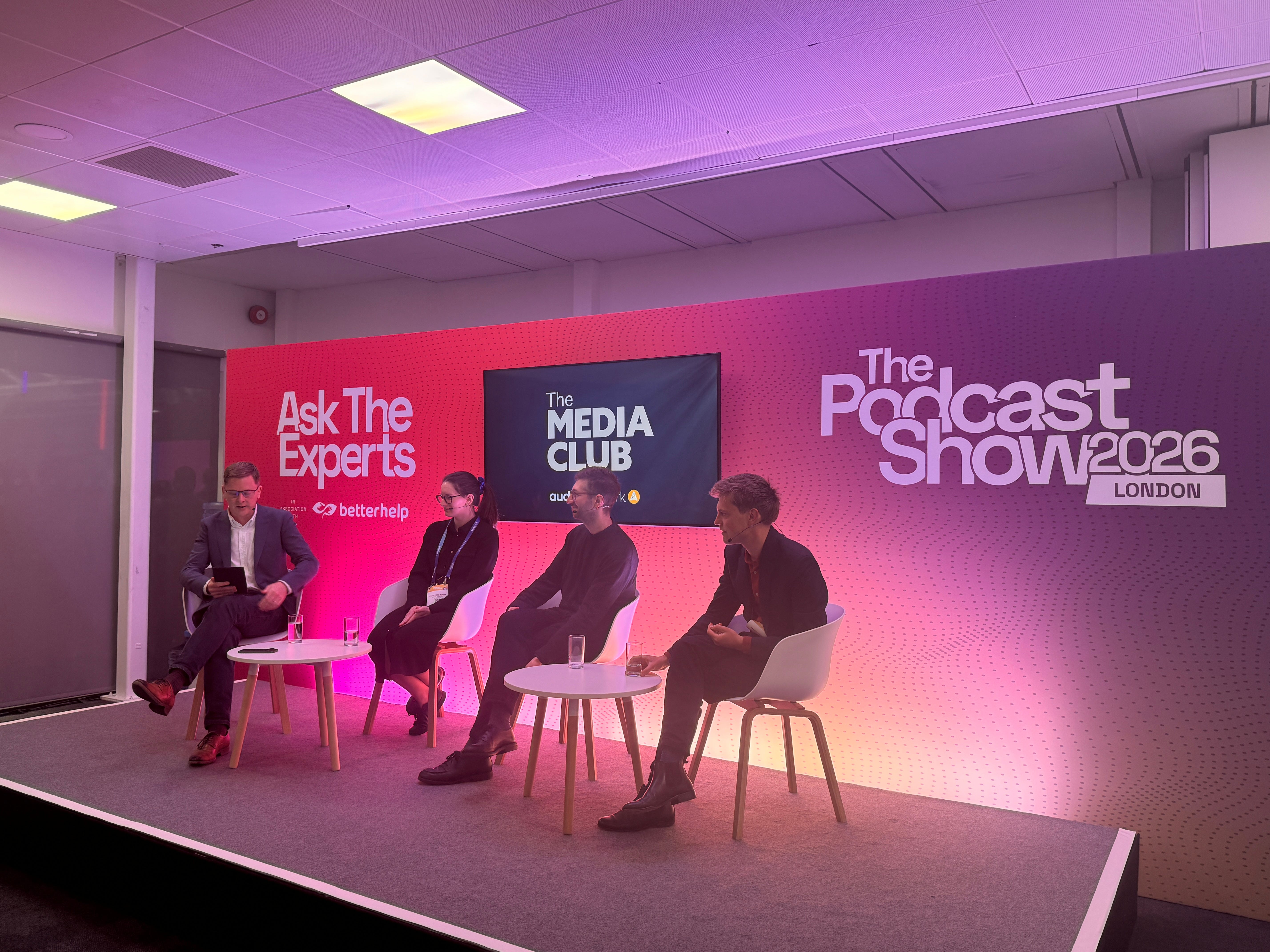
I arrived slightly late for a live recording of Matt Deegan’s The Media Club (apologies, Matt) but just in time to hear BBC Audio’s Head of Production & Development Tom Curry discussing the merits of video. Tom pointed out that even though a lot of video-first podcasts are launching it’s not necessarily an absolute requirement. Video is expensive so always consider if it’s the best use of your resource. Perhaps it might be better allocated to refining the script or improving the recording process? Do what you think best swerves the audience.
Regarding vertical video, Jim Waterson had an interesting anecdote. He’d recently invested in a video clip campaign to try and boost audience to his London Centric newsletter. He didn’t quite get the return on investment he’d wished for, but he did get sources for future stories.
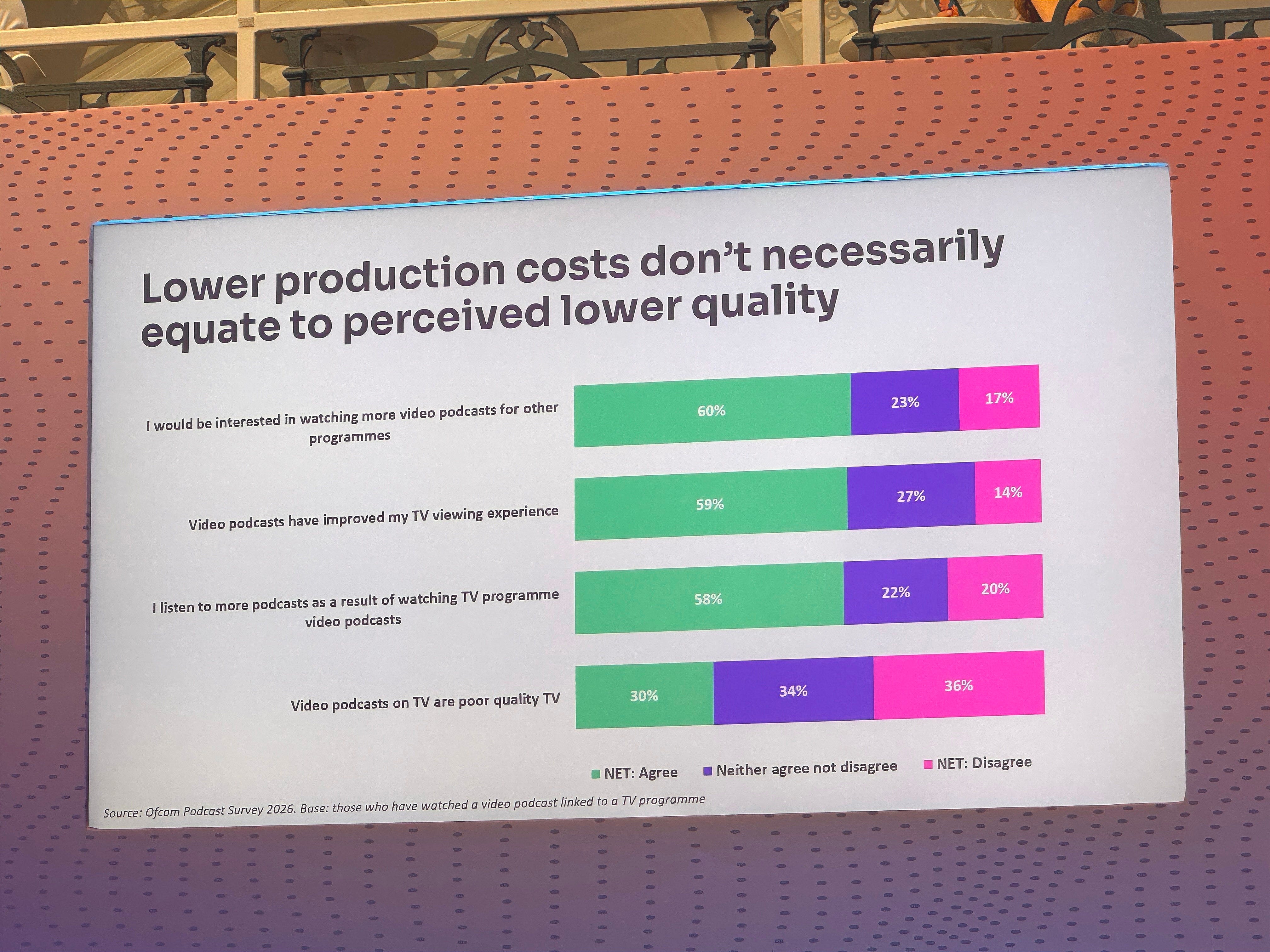
Elsewhere, Francesca Hunt and Mark Pearson presented Ofcom’s Audio listening in the UK report. I was intrigued by this slide that reaffirmed that we don’t always need cinematic productions for our video podcasts, although I will always repeat that poor video (and especially poor audio) can do an incredible amount of damage to your brand - so get the basics right.
2. Experiment your way towards better monetisation
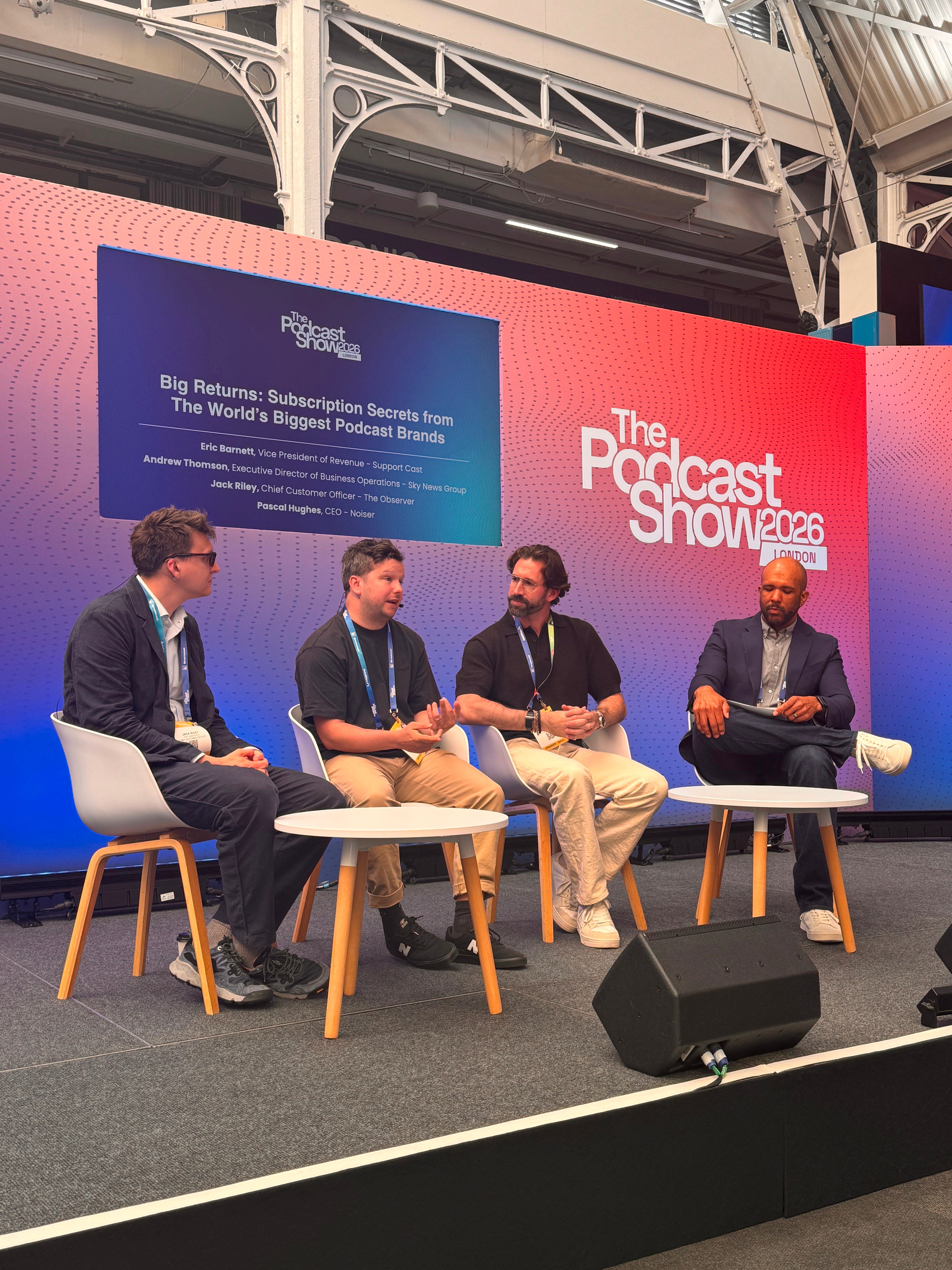
With the launch of Sky Insider’s ad-free listening and bonus episodes this week, it was an excellent opportunity to hear about podcast monetisation with Andrew Thomson, Executive Director of Business Operations at Sky News. Alongside Noiser’s CEO Pascal Hughes and Tortoise Media/The Observer’s Jack Riley the key theme here was finding the perfect price point for your product. Jack acknowledged audience retention was now become a key focus - part of a wider media trend as brands look to super serve their current subscribers now that top of funnel activity has become harder to convert. All three panellists agreed that creating a sense of community around podcasts was essential as was immediately adding value as soon as the subscription kicked in. Podcasts should dovetail nicely with audience retention methods because they are ‘habit-forming’.
Need some ideas to encourage subscriptions? Pascal pointed to the power of the ‘padlocked’ podcast - the greyed out podcast you can see, but can’t touch until you sign up. Also, try lowering your annual membership costs and increasing your monthly costs - but keep iterating to find what works for your audience.
3. Don’t forget to warm up your audience with the cold open
AudioUK’s Chris Baughen hosted a well- attended session on basic storytelling techniques with Willard Foxton from Storydriver. Willard explained why the cold open was so critical to any story, and why writing teams spend an enormous amount of time redrafting until they landed on the best opener. It essentially has to be a microcosm of your overall story, setting up expectations that can be delivered upon or upset. Also, try and make sure you have a few ‘Oh shit!’ moments in your podcasts - moments that are so impactful to an audience, they feel compelled to tell someone else. The gist of the session? Basic story telling techniques remain essential!
4. Think about the relationship you want with your audience
The Pod Save The UK session was hilarious with comedian Nish Kumar and journalist Coco Khan. They gave us a great insight hugely popular and irrelevant podcast on politics. As Nish said: ‘We really spent a long time deciding the kind of relationship we wanted with the audience. And eventually decided we ARE the audience. We’re not trying to be experts, we are just trying to be more informed.’ Nish also made a interesting side note about politics in general. It’s not necessarily true that the older you get, the more you move to the right of politics. ‘The less you give people to conserve, the less they are going to swing conservative.’ That’s interesting, as well as their conversation about what would make the ultimate woke packet of crips.
The answer is, of course, Space Rangers.
5. Authenticity doesn’t have to be human
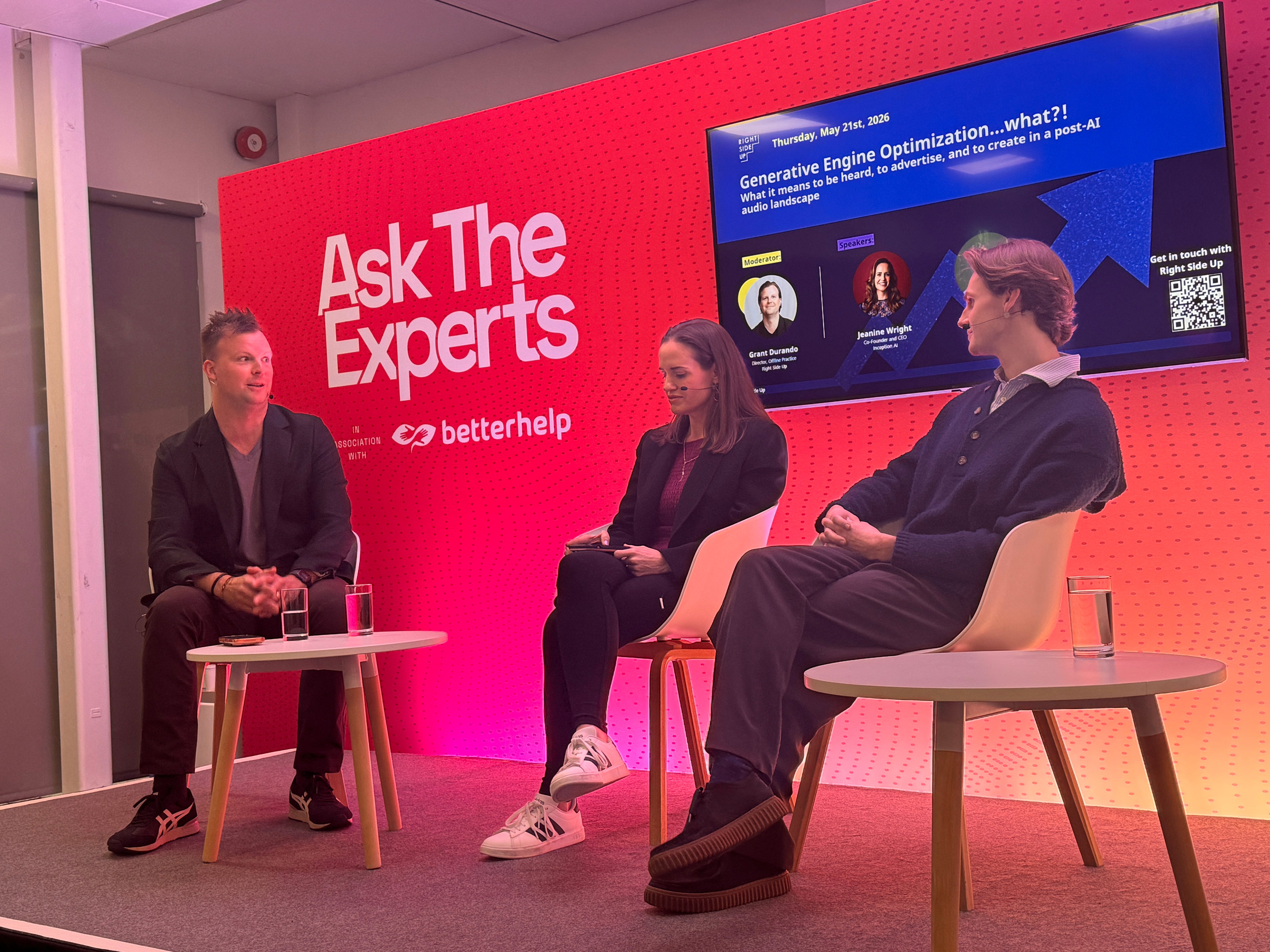
I was pleased to see a session on Generative Engine Optimisation (GEO) at the show and we had an interesting panel discussion with Jeanine Wright from Inception Point AI, Grant Durando from Right Side Up and Benjamin Doyle from Voy. It’s definitely something I’m going to drill into further as some of the comments from Jeanine raised more than a few eyebrows in the room. Without simplifying her argument too much she explained that we’re reaching the stage where there’s going to be more AI-generated content online than human. At the same time, that AI content is becoming more useful and valuable to the audience every day. At the moment we think of trusted content as essentially human, but as we begin to rely more on AI, that is going the change. Audience will trust useful information, speedily delivered and in formats that are convenient. Paraphrasing Voy’s Benjamin Doyle, that’s all very well, but what if your trying to source information about a medical injection? He thinks people would prefer a human to be involved somewhere in the loop for that particular answer.
This particular session stayed in my mind for quite a while afterwards so I’ll do a follow up. The AI-tsunami isn’t going away so what safeguards, if any, should be put in place to protect audiences from the free market of (mis) information? And who should manage those safeguards - the regulator? the platform? the podcaster?
Whatever the answer, it’s still evident that podcasts will play a vital role in our media consumption because people crave connection. We just need to be aware that AI is disrupting that connection and we still need to figure out if its ultimately a ‘benefit or a hazard’.
Which is, if you didn’t know, a Blade Runner quote.
Related articles
How to Grow a Podcast: Product, People and Promotion – Beers & SEO episode
Mum, Are Podcasts Created By Humans Better Than AI-Generated Podcasts?
Newsrewired 2026: In Opaque Times, Let Experimentation Shine Through